
The best month to visit Sedona from Texas depends on the trip you want. Spring brings wildflowers and hiking-friendly weather, while fall offers crisp air and appealing afternoon light. Both seasons are popular, so favorable conditions can also mean busier trails and town streets.
To choose between those seasons, summer heat, and a quieter winter visit, weigh the weather against your travel time and plans. The month you choose can affect how much you explore, how you handle crowds, and how much room you have to slow down and enjoy the scenery.
This guide compares the seasons and offers practical ways to plan around hiking, scenic drives, and stargazing. It also covers how to fit Sedona into a longer trip from Texas. Use it to narrow down dates that suit your interests, schedule, and preferred pace.
Key Takeaways
- Spring and fall suit many visitors, but the best month to visit Sedona from Texas depends on your preferred balance of weather, crowds, scenery, and activities.
- Compare spring, summer, fall, and winter by the kind of trip you want, rather than treating one season as the best for everyone.
- Factor travel time from your Texas departure city into your dates and itinerary so the journey leaves room to enjoy Sedona.
- Before you go, review current flight schedules, road conditions, forecasts, and attraction advisories.
- Once you’ve chosen your dates, consider a private, customizable local experience that pairs scenic stops with wine, breweries, or chocolate.
Best Month to Visit Sedona from Texas: Start with Your Ideal Trip
Spring and fall are popular choices for outdoor exploring, but there isn’t one best month for every traveler. Start with what you want to do among Sedona’s red-rock formations: hike, photograph the landscape, take a scenic drive, or keep a slower pace. The best month to visit Sedona from Texas also depends on how much time you’ll have after accounting for the journey.
Your departure city affects your travel plans. Driving from Dallas is different from flying from another Texas city, and flight routes and schedules vary. Treat the travel day as part of the trip, not just a line on the itinerary. For a short stay, choose dates that leave time for a few priority activities. A longer visit gives you more room to adjust plans around weather or crowds.
What does “best month” mean for your Sedona trip?
“Best” might mean comfortable conditions for hiking, or it might mean more breathing room at popular spots. Decide whether you want spring blooms, fall light for photography, scenic drives, or a flexible schedule. Sedona’s elevation and landscape shape its seasonal character; Sedona’s climate and geography offer useful context. No month guarantees ideal conditions, so match your priorities to the season and check the forecast closer to departure.
A quick seasonal answer for Texas travelers
For a first visit focused on outdoor activities, compare spring and fall. Both are popular, but spring wildflowers and fall scenery create different experiences. Summer may suit travelers who can plan around heat and prefer a quieter-season feel. Winter may appeal if you want a calmer visit and are comfortable with cooler conditions.
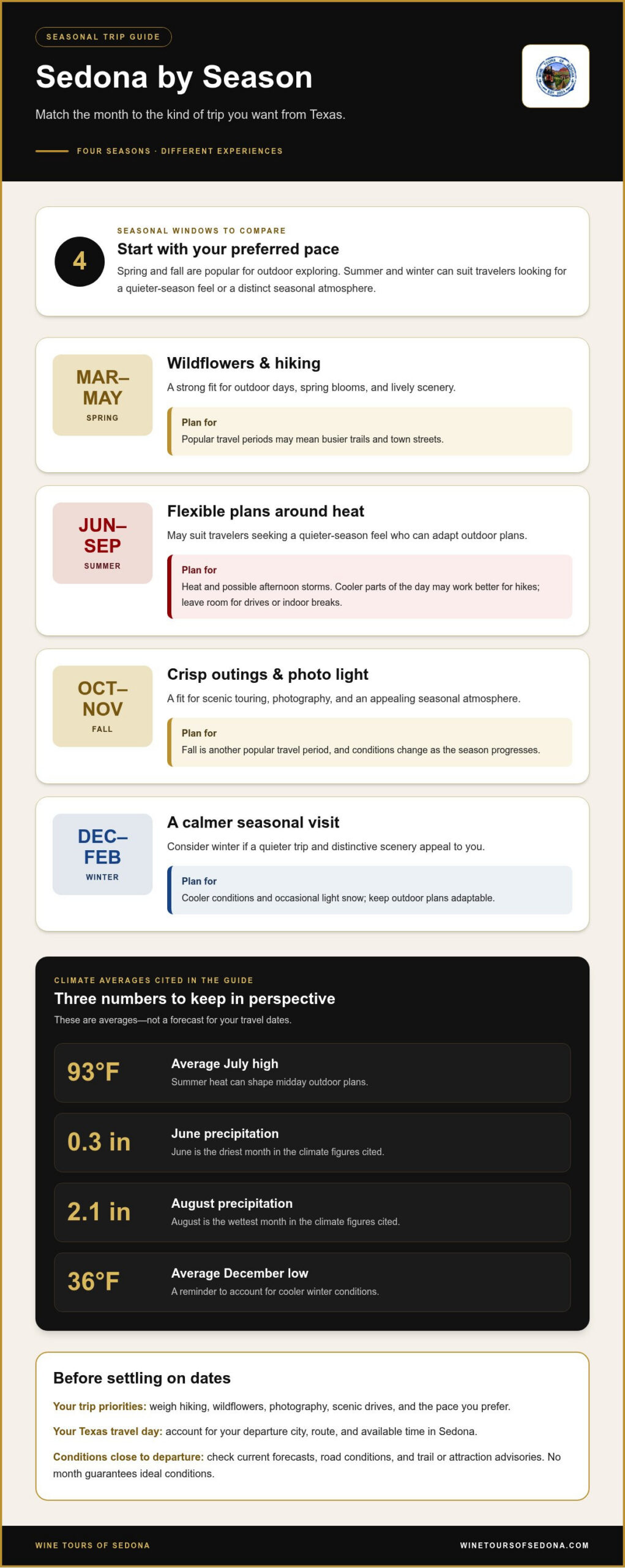
- March to May: Consider spring for wildflowers and hiking, while allowing for busy travel periods.
- June to September: Consider summer for a quieter-season feel, but plan around heat and possible afternoon storms. The article’s climate figures include an average July high of 93°F, June as the driest month at 0.3 inches of precipitation, and August as the wettest at 2.1 inches.
- October to November: Consider fall for crisp-air outings and appealing photography light, while expecting another popular travel period.
- December to February: Consider winter for a quieter trip. Occasional light snow is possible, and December’s average low is 36°F.
These figures describe climate averages, not the conditions you’ll get on your travel dates. Use them to narrow your options, then check the forecast before committing to hikes or other outdoor plans. The next sections compare the seasons in more detail, so you can weigh the trade-offs against your travel style.
Sedona Seasons Explained: How Each Month Changes the Experience
Think of Sedona’s calendar as a set of different experiences, not a promise of perfect weather. Spring and fall attract visitors looking for comfortable outdoor days. Summer and winter may suit travelers with different priorities, such as quieter travel or a distinct seasonal atmosphere. If you have a packed itinerary, leave room to shift hikes or drives when conditions change.
Spring and fall: popular windows with different advantages
From March through May, wildflowers and inviting conditions for outdoor activities make spring appealing to hikers and visitors who want to spend much of the day outside. That popularity can also mean busier periods. October and November offer a different draw: crisp-feeling days and attractive light for photography, with conditions changing as the season progresses. Choose spring if blooms are a priority; lean toward fall if seasonal light matters more than avoiding crowds.
Summer and winter: quieter or distinctive alternatives
Summer heat can make midday outdoor plans less comfortable. Schedule hikes for cooler parts of the day and leave room for scenic drives or indoor breaks. Afternoon monsoon storms can also affect plans. Winter may bring a quieter visit and occasional snow on the red rocks, but conditions vary. In any season, check forecasts and trail or attraction notices close to departure instead of relying on averages alone.
| Season | Best fit | Trade-off |
|---|---|---|
| March to May | Hiking, wildflowers, and lively spring scenery | Popular travel periods may mean more visitors |
| June to September | Flexible travelers seeking a quieter-season feel | Heat and possible afternoon storms can shape outdoor plans |
| October to November | Photography, scenic touring, and crisp seasonal atmosphere | Fall is another popular period, and conditions change through the season |
| December to February | A calmer visit and a chance to see winter scenery | Cooler conditions may call for adaptable outdoor plans |
Use the table to identify the trade-off that suits you, then compare your travel dates with Sedona’s average weather and tourism scores. Climate averages show broad seasonal patterns, but they can’t predict the conditions for a particular week. Check current forecasts and activity notices before finalizing hikes, scenic stops, or other outdoor plans.
For a more relaxed day between outdoor activities, consider a private local outing tailored around wine, breweries, chocolate, or scenic stops. Wine Tours of Sedona’s private wine and scenic tours offer a way to build an experience around your party’s interests and pace.
Spring or Fall in Sedona? Compare Months Against Your Texas Trip Priorities
Spring and fall both invite you outdoors, but they suit different priorities. Compare typical conditions and visitor levels with the experiences you most want, rather than choosing by reputation alone. Use the table as a starting point, not a forecast, and check current information for your dates before making plans.
| Season | Outdoor comfort | Crowd outlook | Trip style that may fit |
|---|---|---|---|
| Spring | Often appealing for longer outdoor outings; conditions vary by date | Popular, especially during busy travel periods | Hiking, wildflower viewing, and active days |
| Fall | Often pleasant for exploring, though the season shifts over time | Another popular window | Photography, scenic drives, and a crisp seasonal mood |
| Summer | Heat may call for early or later outdoor activities | Can be quieter than peak spring and fall periods | Flexible schedules and plans that allow for indoor breaks |
| Winter | Cooler conditions can shape time outdoors | Often a quieter alternative | A slower visit, with room for scenic stops and adaptable plans |
Choose a month for hiking, scenery, or a quieter visit
If hiking is central to your trip, spring and fall are natural starting points. Consider how much you value comfortable trail conditions compared with having more space at popular spots. Spring flowers can add color to the landscape, though bloom timing varies. Fall’s changing light may appeal to photographers who want to linger over red-rock views. Neither season guarantees ideal conditions, and popular travel periods can require more advance planning for lodging and activities. Check the forecast and seasonal notices before setting a hike-heavy itinerary.
Summer or winter may suit you better if you want a scenic visit with fewer fixed plans. In summer, keep the schedule flexible so heat or storms don’t lock you into a long outdoor outing at an uncomfortable time. In winter, have alternatives in mind in case cooler weather changes your plans. Your preferred pace matters, too: a short trip with a tightly scheduled activity list leaves less room to rearrange plans than a longer stay.
Factor in the journey from Texas
Your Texas departure city affects your transport options and timing. Compare current flight schedules and driving routes from your starting point rather than relying on a one-size-fits-all estimate. For a brief getaway, count arrival and departure days as part of the trip; you may have fewer full days in Sedona than the calendar suggests. Leave time to rest after traveling instead of stacking your first day with demanding outdoor plans.
The best month to visit Sedona from Texas is the one that matches your preferred activities, crowd tolerance, and available trip time, not a universally perfect date. Choose a season, then narrow your dates using current forecasts and transport details.
Plan Your Sedona Visit from Texas: Dates, Travel, and a Flexible Itinerary
Once you’ve chosen a season, plan around the journey as well as the landscape. Your departure city affects flight options and driving routes, so base your schedule on your own starting point. Travelers comparing plans from Phoenix, Tempe, Scottsdale, Los Angeles, Las Vegas, or Dallas can use the same approach: allow time for arrival, local transportation, and settling in before a demanding hike or tightly scheduled outing.
Build travel dates around the journey
Compare current flight schedules with driving routes from your Texas city, and consider how much of your vacation you’re willing to spend in transit. For a short visit, don’t count arrival and departure days as full sightseeing days. Recheck schedules and road conditions as your trip approaches, and leave room for changes along the way. During popular travel periods, plan lodging and activities early rather than waiting until your itinerary is nearly set.
Shape a balanced Sedona itinerary
Choose a manageable mix of outdoor time, scenic stops, and unhurried meals. For example, pair one major hike with a gentler scenic outing instead of filling every day with strenuous activities. Keep an alternative in mind in case weather, trail conditions, or energy levels change your plans, and check attraction advisories before setting out. Use this article alongside the Sedona Travel Guide 2026 for broader destination ideas.
A private local tour can bring several interests together in one outing. Wine Tours of Sedona offers customizable wine, brewery, chocolate, and scenic experiences, with itineraries shaped around your interests and pace. A private Sedona tour can fit between independent days outdoors.
Before leaving Texas, use this checklist to keep the details in view:
- Set dates: Choose a travel window that fits your preferred season, activities, and crowd tolerance.
- Compare transport: Review current flights and driving routes from your actual departure city.
- Allow transition time: Account for arrival, local transportation, rest, and departure when deciding how many activities fit.
- Plan the essentials: Select lodging and must-do activities, with advance planning during popular periods.
- Balance each day: Mix outdoor outings with scenic stops and time to pause instead of overloading the schedule.
- Recheck conditions: Before departure, review forecasts, road conditions, transport schedules, and attraction or trail advisories.
The best month to visit Sedona from Texas becomes a practical choice when the travel days and on-the-ground plans work together. Leave space to adjust, so your trip feels less like a race between reservations and more like time to experience the red-rock country at your own pace.
Make the Most of Your Chosen Month with a Local Sedona Experience
Once you’ve chosen a month, plan around what you want to experience, not just how many stops you can fit in. Sedona’s red-rock views, vineyard landscapes, tasting rooms, and outdoor activities offer different ways to spend your time. Pairing a local outing with independent exploring can change the pace of your itinerary, especially after a long journey from Texas. The best month to visit Sedona from Texas is only part of the decision; how you spend your time makes the trip personal.
Pair the season with the experience you want
Let your interests guide the balance. If you’re eager to hike or photograph the red rocks, leave room for outdoor time and consider a tasting or scenic outing as a gentler counterpoint. In warmer periods, keep the schedule flexible so outdoor plans can shift with the forecast. Cooler-season travelers can focus on scenic touring and leisurely stops without building every day around a long hike.
Wine Tours of Sedona offers private, customizable wine, brewery, chocolate, and scenic tours. Depending on your interests and timing, an itinerary can bring together vineyard visits and scenic stops, or pair a brewery experience with chocolate. Keep the plan responsive to the day’s conditions and your party’s preferred pace. For more ideas, browse the site’s guide to Sedona tours.
What to expect from a private local tour
Wine Tours of Sedona has operated in the area since 2004. Each reservation is private, and guests are not combined with other reservations. Customize the itinerary around wineries, breweries, scenic stops, and start times to suit your chosen month and other plans. Complimentary pickup anywhere in Sedona makes it easier to include an outing without arranging a separate drive to the starting point.
Wine tasting or beer flight fees are included in the tour price. Keep in mind that purchases of wine are separate from the included tasting fees as you plan your budget and decide how a tasting experience fits alongside meals and independent sightseeing.
Once you’ve selected your travel dates, consider whether a private local outing would complement your plans. Explore Wine Tours of Sedona’s private tours for a customizable day among the Verde Valley’s flavors and landscapes.
Turn Your Sedona Dates into a Personal Experience
Your calendar sets the scene, but the moments you make room for give a journey its meaning. As you choose the best month to visit Sedona from Texas, picture the pace you want once you arrive: a quiet pause beneath the red-rock cliffs, a taste of the Verde Valley, or a day that balances scenic stops with time to take it all in. Let that vision guide the final details of your itinerary.
A local experience can add a different dimension to your trip, whether you’re celebrating a special occasion or taking a relaxed break between days of exploring. Wine Tours of Sedona creates private experiences with itineraries tailored to guests’ interests, along with complimentary pickup anywhere in Sedona.
May your chosen dates bring unforgettable views, memorable flavors, and unhurried moments to remember long after you return to Texas.
Frequently Asked Questions
What is the best month to visit Sedona for comfortable weather?
April and October are useful months to compare if you want comfortable conditions for outdoor exploring, though neither guarantees ideal weather. Spring brings the possibility of wildflowers, while fall can offer appealing light for photography. To choose the best month to visit Sedona from Texas, weigh those seasonal differences against your activities and crowd preferences, then check a date-specific forecast before finalizing hikes or other weather-sensitive plans.
Is Sedona too hot to visit in July or August?
Not necessarily, but summer heat can make a full day of exposed outdoor activity uncomfortable. If July or August suits your schedule, plan hikes and other strenuous outings for cooler parts of the day, and leave room for indoor breaks or a relaxed meal. Pack sun protection and water, review the forecast for possible afternoon storms, and be ready to adjust your plans.
Can you visit Sedona in winter from Texas?
Yes. A winter trip can work well if you’re comfortable dressing in layers and keeping outdoor plans flexible. Pack for changing conditions rather than assuming every day will feel the same, and check forecasts for Sedona and your route from Texas before setting out. If you’re driving, leave flexibility in your travel schedule. If flying, compare current flight options with the ground transportation available for your arrival time.
How far in advance should I plan a Sedona trip during spring?
There’s no single booking deadline for every spring trip. Start planning when your travel dates take shape, especially if you have specific lodging or activities in mind during a popular period. Confirm the essentials first, then keep a backup activity for days when weather, trail notices, or visitor demand change your plans. Flexibility is more useful than filling every hour before you arrive.
What airport should Texas travelers compare when planning a Sedona visit?
Compare current itineraries into Phoenix Sky Harbor and Flagstaff Pulliam, then consider the ground transportation needed to reach Sedona. The best option depends on your Texas departure city, available connections, arrival time, and onward transport. Check airline schedules and transfer details together: a flight that looks convenient may leave you with a less practical final leg. Recheck schedules as your travel dates approach.
Does Sedona observe daylight saving time?
No. Sedona follows Arizona time and does not shift its clocks for daylight saving time. Texas observes daylight saving time, so the time difference changes during the year: Sedona is two hours behind Texas while Texas is on daylight time, and one hour behind during standard time. Check the local time in both places when arranging flights, transfers, reservations, or calls across state lines.
Are Sedona trails open year-round?
Some trails may be accessible in every season, but don’t assume a particular route is open during your visit. Weather, fire impacts, maintenance, or other advisories can affect access. Check current trail and park notices shortly before heading out, and have an alternative in mind in case your first choice is unavailable. Conditions can differ between trailheads, so verify the specific route you plan to hike.
Plan a private, customizable Sedona experience with Wine Tours of Sedona to add wine, brewery, chocolate, or scenic stops to your trip.
Recent Comments