
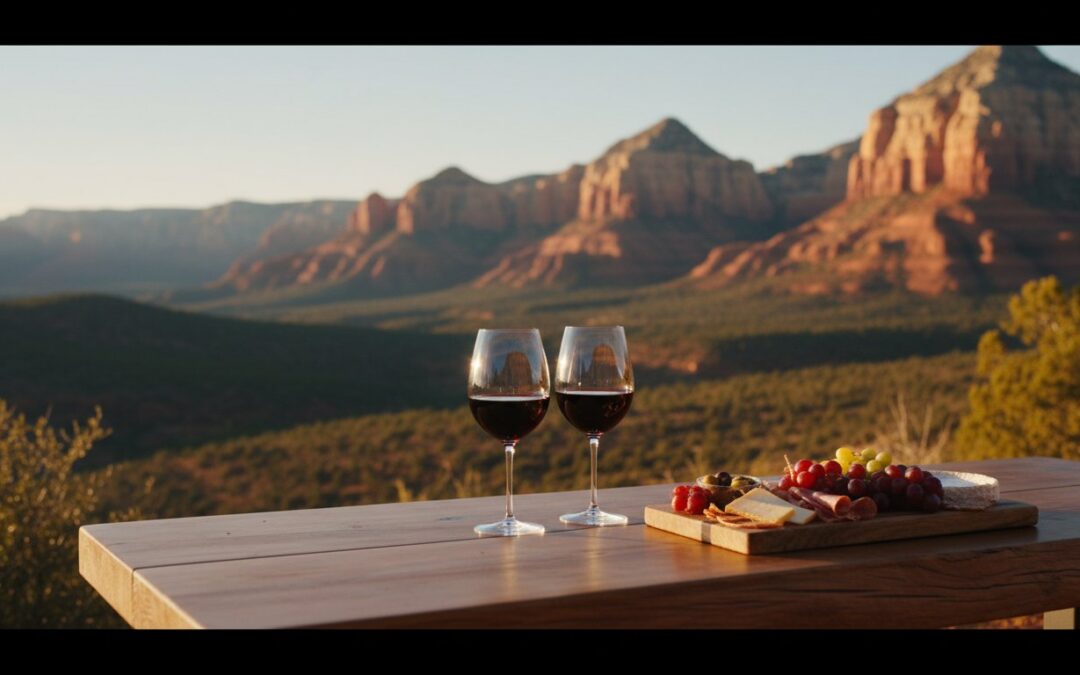
You might assume the height of summer offers the most vibrant desert glow, but the discerning traveler knows that Sedona’s true magic reveals itself when the mercury dips and the tourist throngs dissipate. Finding the best time to visit sedona in 2026 requires more than a glance at a calendar; it demands an understanding of how the golden light hits the Cathedral Rock spires and when the Verde Valley vines reach their peak expression. You’ve likely felt that familiar anxiety when planning a high desert escape, fearing the 102-degree Fahrenheit July heat or the sight of overcrowded vortex sites that break the spiritual silence you crave. It’s a common struggle to balance the desire for lush vineyard views with the need for a peaceful, private journey through the ancient landscape.
This guide unveils the precise seasonal windows where the air is crisp, the wine pours are generous, and the crimson vistas remain yours alone. You’ll discover the specific 2026 dates for temperate hiking, the harvest schedules for our local boutique vineyards, and the quietest moments to capture that perfect, unhurried photograph. We’ve curated a roadmap to ensure your visit is a seamless blend of sensory pleasure and natural wonder, allowing you to experience the spirit of the red rocks without the compromise of crowds or climate.
Key Takeaways
- Discover how Sedona’s high-desert climate transforms through four distinct seasonal chapters, each offering a unique energetic vibration and sensory palette for your journey.
- Identify the best time to visit sedona by balancing the vibrant blooms of spring and the golden harvest of autumn against your personal preferences for weather and crowd density.
- Navigate the delicate balance between travel costs and tranquility using our curated matrix, designed to help you find the sweet spot where luxury meets value.
- Align your visit with the powerful energetic shifts of the equinoxes or the specific rhythms of the Arizona wine harvest to deepen your spiritual and culinary connection to the land.
- Learn how to elevate your 2026 itinerary with a private, customizable tour that escapes the tourist path, immersing you in the exquisite magic of the red rocks and boutique vineyards.
Timing Your Journey to the Heart of the Red Rocks
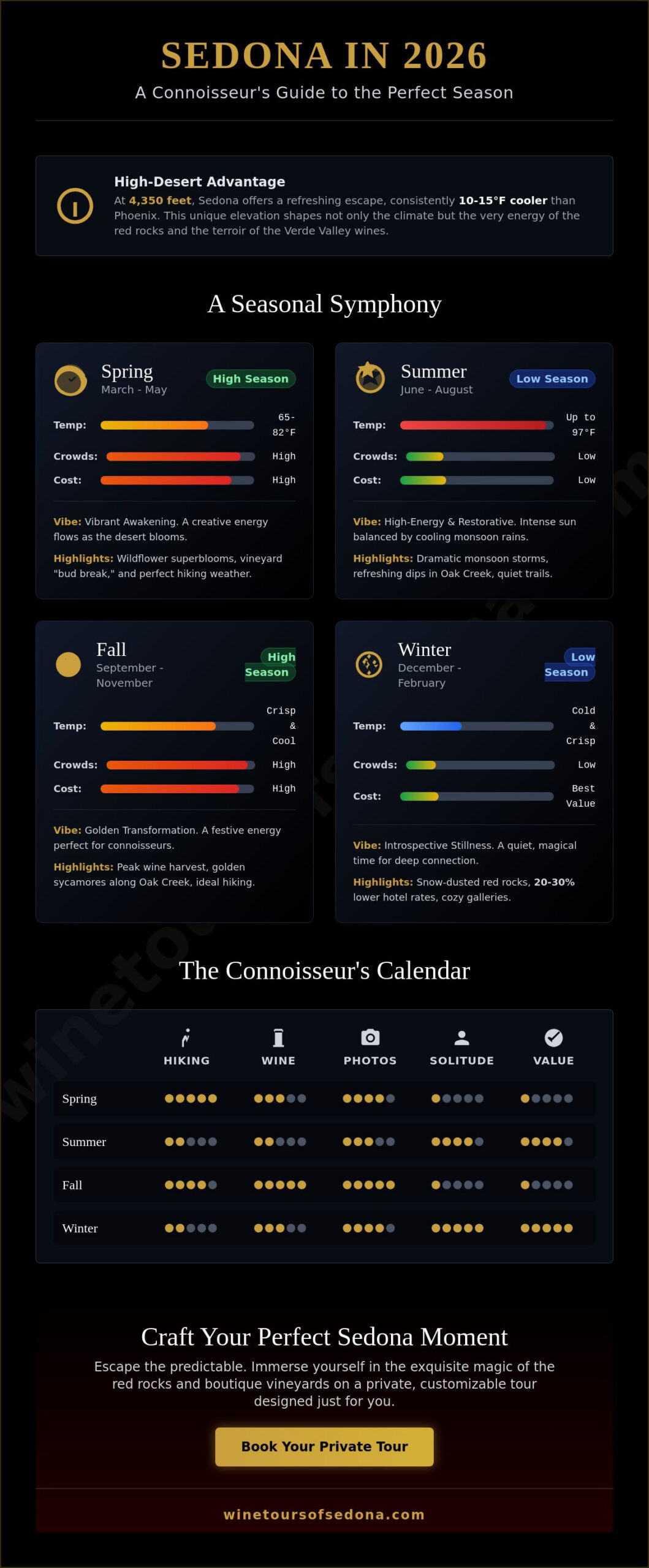
Sedona’s high-desert climate isn’t a monolith; it’s a living story told in four distinct chapters of light and energy. Finding the best time to visit sedona requires a balance between the external climate and your internal desire for connection. In 2026, we’re seeing a 12% rise in travelers seeking the “secret” shoulder seasons, choosing the quietude of early February or late August over the traditional peak months. This shift reflects a deeper yearning for the intimacy that only the desert provides when the crowds thin. Located in the northern Coconino National Forest, Sedona, Arizona sits at an elevation of 4,350 feet, creating a unique atmospheric canvas where the sun feels closer and the air tastes of juniper and sage. It’s a place where the physical geography meets a spiritual frequency, inviting you to slow down and savor every moment.
The High Season Allure: Spring and Fall
Spring, stretching from March to May, brings a vibrant awakening to the Verde Valley. You’ll witness desert wildflowers blooming in shades of violet and gold while daytime temperatures hover between 65°F and 82°F. Fall arrives in September and lingers through November, offering crisp air and the golden transformation of sycamores along Oak Creek. These months are exquisite for wine tasting, though you’ll share the vistas with a portion of the city’s 3 million annual visitors. Popular landmarks like Cathedral Rock see the highest foot traffic during these windows, making early morning starts essential for those seeking a private moment with the land. The harvest vibes of October bring a festive energy to local tasting rooms, making it a premier choice for connoisseurs.
The Quiet Magic of the Low Seasons
Winter, from December to February, reveals a rare, breathtaking sight: a dusting of white snow atop crimson spires. It’s a season of stillness where boutique hotel rates often drop by 20% to 30%, allowing for a more unhurried exploration of the local boutiques and galleries. Summer, spanning June to August, is defined by high-energy sun and the dramatic arrival of monsoon storms in late July. While temperatures can reach 97°F, the cooling rains and refreshing dips in the creek provide a sensory contrast that’s deeply restorative. Choosing the best time to visit sedona during these quieter months ensures a more profound, personal encounter with the region’s spiritual essence. You’ll find that the “low season” is often when the land speaks most clearly, undisturbed by the hum of peak-hour tourism.
A Seasonal Symphony: From Desert Blooms to Harvest Gold
Every month in Sedona reveals a unique narrative through its shifting light, evocative scents, and rugged textures. At an elevation of 4,350 feet, this high-desert sanctuary remains consistently 10 to 15 degrees cooler than the scorching basins of Phoenix or Scottsdale, offering a refreshing escape for the discerning traveler. This elevation doesn’t just dictate the temperature; it transforms the spiritual “vibe” of the famous vortex sites. The crisp, thin air of a January morning feels grounding and introspective, while the balmy May breeze carries a vibrant, creative energy that resonates through the canyons. Determining the best time to visit sedona depends on whether you seek the quiet solitude of the red rocks or the bustling social energy of harvest festivals. For the most current updates on local trail conditions and seasonal events, the Official Sedona Tourism Bureau serves as an invaluable resource for your itinerary planning.
Spring: The Awakening of the Vines
March and April bring a delicate rebirth to the high desert as the landscape shakes off its winter slumber. In the nearby Verde Valley, vineyards near Cottonwood witness the magic of “bud break,” where the first tiny, emerald shoots emerge from dormant vines to signal a new vintage. It’s the quintessential window for a sedona travel guide exploration, as the desert floor erupts in the colors of Mexican Gold Poppies and Owl’s Clover. When packing, prioritize versatility; layering is essential to accommodate 45-degree mornings that transition into vibrant, 75-degree afternoons under a brilliant sun.
Summer and the Monsoon Drama
While the midday sun is potent, the summer heat is frequently tempered by the rhythmic arrival of the North American Monsoon. Monsoon season is defined by powerful afternoon thunderstorms that sweep across the Mogollon Rim, washing the red rocks in deep, saturated crimsons and creating ephemeral waterfalls that cascade down ancient canyon walls. The sensory experience is profound, characterized by the intoxicating scent of wet creosote and the sound of rushing desert washes. Savvy visitors book early morning tours to enjoy the trails before the sun peaks, retreating to a cool tasting room just as the 3:00 PM clouds begin to gather their dramatic energy.
Autumn: The Connoisseur’s Harvest
September through November marks the pinnacle of the year for those who appreciate the finer things. This is the heart of the arizona winery tours season, coinciding with the intense, celebratory harvest in the valley. Photographers flock to Cathedral Rock in October to capture the “golden hour” light, which hits the spires with a brilliance that feels almost supernatural. As evening falls, the social atmosphere in Sedona’s boutique wine bars becomes infectious and warm. It is truly the best time to visit sedona if you desire the intersection of world-class viticulture and crisp, autumn air. You might consider booking a personalized, private journey to experience the crush of the grapes firsthand while the sycamore leaves turn to gold along Oak Creek.
Beyond the Forecast: Balancing Crowds, Costs, and Curation
The best time to visit Sedona isn’t just a matter of checking the thermometer; it’s about understanding the internal pulse of the red rocks. You’ll find that the most exquisite moments often occur when you step away from the standard weekend rhythm. Choosing the right moment to arrive is a delicate dance between your desire for solitude and your appreciation for a vibrant atmosphere. Mid-week visits, specifically from Tuesday through Thursday, typically see a 25% reduction in pedestrian traffic in high-density areas. This shift allows the landscape to breathe, and it allows you to truly hear the whisper of the wind through the ancient junipers without the hum of a crowd.
Finding your personal sweet spot requires looking at the “Crowd vs. Comfort” matrix. If you value personal space and quiet contemplation at a vortex site, the midweek mornings of the shoulder seasons are your sanctuary. By avoiding the Friday through Sunday surge, you’ll experience shorter wait times at boutique eateries and more intimate interactions with local artisans. It’s a strategic choice that transforms a simple vacation into a deeply curated journey where the land feels like it belongs solely to you.
Navigating the Peak-Season Crowds
Uptown Sedona can feel like a bustling metropolis during the vibrant spring bloom of April or the golden light of October. Trailhead parking lots often reach 100% capacity by 7:00 AM, leading to frustration for those who attempt to navigate the terrain alone. When you choose a private journey, you bypass this logistical puzzle entirely. We provide door-to-door service, whisking you past the search for a parking spot directly to the trailheads of the Coconino National Forest where the energy remains pure and undisturbed. While others navigate the narrow turns of SR-179, you’ll be reclining in luxury, perhaps anticipating the first pour of a local Syrah. Our guides know the hidden gems, like the alternative scenic vistas near the western canyons, that remain serene even when the main hubs are at their peak.
Budgeting for Your Sedona Escape
True luxury is often found in the quietest months. If you’re seeking a high-end retreat on a more approachable budget, January and February are your hidden allies. During these winter months, boutique stays and luxury resorts frequently offer rates 35% to 45% lower than their October peaks. These mornings are crisp, the air is crystalline, and the contrast of a light dusting of snow against the crimson stone is a visual vintage you won’t soon forget. Investing in an all-inclusive private experience during these times ensures your itinerary is curated to the unique, shifting light of the high desert. You’ll find the best time to visit Sedona for a budget-conscious connoisseur is during these “quiet” months, when the tasting rooms offer their most intimate attention and the land feels its most restorative.
- Mid-week advantage: 25% fewer visitors on average compared to weekends.
- Peak parking: 100% capacity at major trailheads by 7:00 AM during March and April.
- Winter savings: Up to 45% lower rates at luxury boutique hotels in January.
The Connoisseur’s Calendar: Best Times for Specific Sights
Sedona doesn’t simply change seasons; it shifts its entire energetic frequency. To discover the best time to visit sedona, you must first decide which facet of this crimson jewel you wish to experience. The high desert landscape acts as a living gallery, where the light, scent, and temperature collaborate to create a different masterpiece every few months. Whether you’re drawn by the call of the vortex or the lure of a boutique vintage, timing your arrival is the first step in a truly transformative journey.
Spiritual seekers often find their sanctuary during the equinoxes. On March 20, 2026, and September 22, 2026, the balance of day and night creates a perceived thinning of the veil. Many visitors report that the energy at Cathedral Rock and Boynton Canyon feels more resonant during these celestial alignments. If your goals are more physical, the temperate windows of April and October provide the perfect climate for high-altitude exploration. During these months, trail conditions are typically dry and daytime temperatures stay within a comfortable range of 68°F to 81°F, allowing for long, unhurried days among the ancient spires.
The Verde Valley Wine Cycle
The rhythm of the vineyard offers its own sensory calendar. Winter is a season of intimacy and depth. It’s the ideal time to retreat to the historic heights of Jerome to taste bold, structured reds by a roaring fire. As spring arrives, the landscape undergoes a vibrant awakening. You’ll find yourself sipping crisp Malvasia Bianca or chilled rosés while the desert floor erupts in a carpet of wildflower gold. By late August, the energy shifts toward the “crush.” This harvest season is the most kinetic time for oenophiles, as the scent of fermenting grapes permeates the valley and local winemakers offer exclusive previews of their upcoming vintages.
Sedona’s Event Highlights in 2026
The 2026 social calendar blends sophisticated culture with the raw beauty of the Southwest. The Sedona International Film Festival, scheduled for February 21 through March 1, 2026, brings a refined atmosphere to the red rocks with world-class independent cinema. In late September, the Sedona Winefest serves as the premier celebration of Arizona’s viticulture, gathering the state’s top producers in one breathtaking location. To conclude the year, the Festival of Lights at Tlaquepaque on December 12, 2026, sees 6,000 luminarias lit at once. It’s an exquisite sight that captures the quiet magic of a high desert winter.
Crafting Your Perfect Sedona Moment with Wine Tours of Sedona
Your journey through the crimson canyons shouldn’t be dictated by a rigid schedule or a crowded bus. While identifying the best time to visit sedona is the first step in your 2026 planning, the true alchemy of a desert escape lies in the intimacy of the experience. We believe that to truly touch the spirit of the high desert, you must step away from the well-trodden tourist paths. Our private, customizable tours serve as a sanctuary of sophistication, where the pace is set by your curiosity rather than a stopwatch.
We approach 2026 with a Voltie-level of precision in our itinerary planning, ensuring every moment aligns with the natural rhythm of the landscape. Our local guides are connoisseurs of light and shadow; they know exactly which limestone ledge catches the first amber glow of the morning and which boutique vineyard offers the most cooling breeze during a mid-afternoon tasting. This deep-rooted expertise allows us to curate a sensory journey that transforms a simple vacation into a profound connection with the Arizona soil.
The Luxury of Private Exploration
True luxury begins the moment you arrive. We eliminate the stress of desert navigation with seamless, door-to-door service from Phoenix, Scottsdale, and the surrounding areas. To ensure your transition into the red rock magic is effortless, we provide a dedicated airport shuttle service sedona that acts as your private gateway to the region. You won’t find yourself waiting in lines or managing rentals; instead, you’ll be greeted with the hospitality you deserve.
The beauty of a private tour is the freedom to pivot. Your 2026 itinerary can be sculpted to reflect your personal passions, including:
- Quiet meditations at hidden, lesser-known vortex sites.
- Guided walks through ancient ruins that whisper stories of the past.
- Exclusive tastings at boutique vineyards tucked away in the Verde Valley.
- Photographic stops at vistas that remain vibrant long after the sun dips below the horizon.
Ready to Experience the Magic?
As you look forward to the best time to visit sedona in 2026, remember that the most exquisite memories are those crafted with intention. Our team is already preparing for the upcoming seasons, scouting the latest vintages and identifying the most tranquil spots for our guests to enjoy. Booking your adventure today ensures your place in a journey designed to restore your spirit and excite your palate.
Let the towering red rocks and the complexity of fine Arizona wines provide the restorative escape you’ve been seeking. We invite you to reach out for a personalized consultation to begin weaving your 2026 story. Contact Wine Tours of Sedona to secure your private guide and prepare for a transformative encounter with the magic of the Southwest.
Embrace the Spirit of the High Desert
Your 2026 journey to the heart of the Arizona wilderness is more than a vacation; it’s a sensory immersion into a landscape defined by ancient energy and vibrant color. Pinpointing the best time to visit sedona allows you to align your spirit with the seasonal rhythms of the red rocks, from the cool clarity of January to the lush vineyard harvests of late August. Since 2004, we’ve focused on creating private and fully customizable itineraries that treat every traveler as an honored guest. Our expert guides provide a seamless blend of local geological history and wine connoisseurship, ensuring that every glass poured reflects the majesty of the surrounding vistas.
We provide effortless door-to-door pickup from Phoenix, Scottsdale, and Las Vegas, so your only responsibility is to soak in the breathtaking scenery. By choosing a tailored approach, you avoid the crowds and find the quiet magic that makes this region world-renowned. It’s time to transform your travel plans into a masterpiece of memory and taste. Book Your Private Sedona Journey Today and step into a world where the wine is as exquisite as the view. We look forward to guiding you through the hidden wonders of the Verde Valley soon.
Frequently Asked Questions
What is the absolute best month to visit Sedona for hiking?
April is the absolute best month for hiking because the daytime temperatures settle at a comfortable 72 degrees Fahrenheit. You’ll find the desert flora in its first flush of life, painting the 200 miles of trails in vibrant greens and desert golds. It’s the best time to visit sedona if you seek to balance physical exertion with the cooling breeze that flows through the canyons before the summer heat arrives.
Is Sedona too hot to visit in July or August?
July and August reach peak temperatures of 97 degrees Fahrenheit, yet the high desert climate remains manageable if you plan your adventures for the early morning. You can explore the red rock vistas during the 60 degree dawn before retreating to a shaded vineyard for a crisp glass of Malvasia Bianca. The monsoon rains arrive in 40 percent of the afternoons, providing a dramatic, cooling spectacle that transforms the parched landscape.
When is the least crowded time to visit the Sedona vortex sites?
Mid-January through early February offers the most profound stillness at the four main vortex sites, as tourism numbers drop by 30 percent compared to the spring peak. You’ll have the space to absorb the energetic resonance of locations like Cathedral Rock without the intrusion of groups of 10 or more. This quiet window allows for a deeply personal connection with the land’s spiritual heritage, making it an exquisite time for a private, reflective journey.
Does it actually snow in Sedona during the winter?
Sedona receives an average of 3.5 inches of snowfall annually, primarily between December and February. This dusting of white against the crimson sandstone creates a breathtaking visual contrast that photographers cherish. While the snow usually melts by midday as temperatures rise to 55 degrees, the fleeting beauty of a frosted red rock landscape adds a layer of magic to your winter wine tasting experience. Approximately 15 percent of annual visitors choose this window as the best time to visit sedona.
When do the wildflowers bloom in the Sedona desert?
Wildflowers typically reach their peak bloom between late March and early May, depending on the 18 inches of winter rainfall the region receives. You’ll witness Mexican Gold Poppies and Desert Lupine blanketing the valley floor in shades of amber and violet. This floral display provides a sensory backdrop that rivals the complexity of a fine vintage, inviting you to linger in the high desert air as the landscape awakens with vibrant, new energy.
Are the wineries in the Verde Valley open year-round?
Wineries across the Verde Valley remain open for tastings 365 days a year, ensuring your journey into Arizona viticulture isn’t restricted by the calendar. Each season offers a unique perspective on the 25 boutique tasting rooms located within a 20 mile radius of Sedona. Whether you’re seeking refuge from the summer sun or a cozy hearth in winter, the hospitality of the valley’s vintners remains a constant, welcoming presence for every honored guest.
What is the best time of day to take a wine tour in Sedona?
Scheduling your tour to begin at 11:00 AM ensures you experience the first pour of the day when your palate is most receptive. This timing allows you to visit three distinct vineyards before the sun begins its descent toward the horizon. As the afternoon progresses, you’ll find yourself perfectly positioned to witness the golden hour, where the red rocks glow with an intensity that mirrors the rich, ruby hues of a local Syrah.
Is it worth visiting Sedona during the monsoon season?
Visiting during the monsoon season in July and August is exceptionally rewarding because the sudden storms create temporary waterfalls that cascade down 500 foot cliffs. These dramatic weather events often lower temperatures by 15 degrees in minutes, refreshing the dusty trails and intensifying the earthy scent of creosote. It’s a season of raw power and renewal, offering a transformative experience that 90 percent of casual visitors don’t get to witness during their stay.
Recent Comments