

A winery visit doesn’t have to revolve around drinking. A non-drinker can join the group, enjoy the estate and its educational side, and simply skip the wine tasting. The best way to handle a non-drinker on a group wine tour is to plan a day with more than tasting, including scenery, food, and other shared experiences.
It’s understandable to wonder whether someone who doesn’t drink will feel like an outsider while everyone else samples wine. They don’t have to: a designated driver can enjoy the itinerary, and a thoughtfully balanced day gives everyone ways to appreciate the landscape and company. Here, you’ll learn how to approach winery visits without drinking, what designated drivers can enjoy, and how to shape an itinerary with activities beyond wine. From tasting-room etiquette to scenic stops and alternative experiences, these ideas can help make the day welcoming, unhurried, and memorable for everyone.
Key Takeaways
- A non-drinker can enjoy a winery visit without tasting wine; make the estate, its food, and its atmosphere part of the experience.
- Design a designated driver’s day around the full outing, not just the tasting, so they can share in the group’s discoveries.
- Balance winery stops with scenery and other activities to create an itinerary that welcomes non-drinkers and families.
- Choose experiences with more than one point of interest, such as wine alongside beer, raw chocolate, or lunch.
1. Can you visit a winery if you don’t drink alcohol?
Yes, non-drinkers can join winery tours in the United States. You can decline wine and still enjoy the winery’s setting, food, and educational activities. Tasting isn’t the only way to experience an estate.
At the tasting room, let the host know you won’t be sampling wine. Ask whether a non-alcoholic drink is available, since options vary by venue. Some wineries may offer grape juice, sparkling water, or another alcohol-free option. You can still follow the group’s discussion of aromas, vineyard details, and winemaking.
Other possible alternatives include mocktails, sparkling tea, botanical drinks, and non-alcoholic wine. Food can also make a visit satisfying, from a meal or small bites to snacks alongside the group’s tasting. The selection differs by winery, so find out what the visit includes before you arrive. A day or two ahead, ask the tasting room about non-alcoholic options, food, pricing, and booking conditions.
Labels use distinct terms. In the United States, “non-alcoholic” generally means under 0.5% ABV, while “alcohol-free” means 0.0%. If you avoid all alcohol, look for the alcohol-free description and ask about the specific drink. This distinction matters even when a bottle is presented as a substitute for wine.
You can take part in a winery visit without tasting. Listen as the host describes the grapes and production, enjoy the grounds, or share food with your companions. If the group pauses for a tasting, stay with them and simply skip the pours. The visit can still offer a close look at the estate’s landscape, hospitality, and craft.
2. Designated-driver participation
Yes. Designated drivers can join winery tours and enjoy the itinerary. For U.S. wine tours, separate transportation planning from tasting arrangements: tasting fees for drivers and non-drinker ticket options depend on the winery and tour operator. These details affect how the driver joins each stop.
Before booking, find out whether the winery charges designated drivers a tasting fee and whether the operator offers a non-drinker ticket. These are separate questions: one concerns the tasting room, while the other concerns the tour booking. A driver who doesn’t taste wine may still have a ticket or other booking conditions tied to the outing.
Plan the driver’s role around the whole route. They can accompany guests into tasting rooms, listen to the host, enjoy the setting, and join other scheduled stops. While friends sample wine, for example, the driver can take in the vineyard views or follow the discussion without tasting. That keeps the driver included rather than treated as an afterthought.
Make the transportation plan clear before the day begins. Agree on who is driving, where the group meets, and how everyone returns after the final stop. The designated driver should plan to abstain throughout the outing, so the ride remains part of the itinerary, not a last-minute arrangement. For a wine-focused outing, an Alcantara Estate Vineyards Tasting Experience can offer a shared setting for guests with different levels of interest in tasting. A thoughtful plan lets the driver enjoy the landscape and company while supporting a smooth group day.
The designated driver should abstain throughout the outing and confirm in advance whether the winery charges a tasting fee or the tour operator offers a non-drinker ticket, since arrangements vary. Before the tour begins, agree on who will drive, the route, meeting points, and the return plan.
3. Activities for non-drinkers and families
A wine tour can include memorable moments beyond the tasting room. During a wine pour, a non-drinker may step outside for a walk if the property allows it. Vineyard rows, garden paths, and estate architecture offer plenty to notice without a glass. Agree on a meeting point with the group before separating, such as the tasting-room entrance.
For families, give younger guests a simple activity with a clear focus. A sketchbook can turn vineyard rows, red-rock silhouettes, or an old stone building into an observation game. Older children might notice grape colors, leaf shapes, or changes in the landscape. These activities focus attention on the place without asking children to join an adult tasting.
Food and scenery can anchor a shared break. Choose an itinerary with a meal or food stop, then make time to enjoy the setting together. A non-drinker may prefer a shaded outdoor table, a scenic viewpoint, or a short walk while others taste. Agree on a return point so independent exploring doesn’t disrupt the next stop.
Build in variety rather than filling every pause with another tasting. Pair a winery visit with a nature walk, a relaxed lunch, or time to explore a town’s historic streets. In Sedona, red-rock scenery can be part of the day’s appeal, with opportunities for families to enjoy the views and take photographs. Leave room for comfortable breaks, especially when children are joining the outing.
Before choosing activities, consider the group’s pace and interests. A guest who enjoys landscape photography may welcome a longer viewpoint stop; a family may prefer a shorter walk and a meal. A flexible plan gives non-drinkers meaningful ways to participate while keeping everyone connected. Share the timing and meeting place at each stop so everyone knows what to expect.
4. Choosing an itinerary for mixed groups
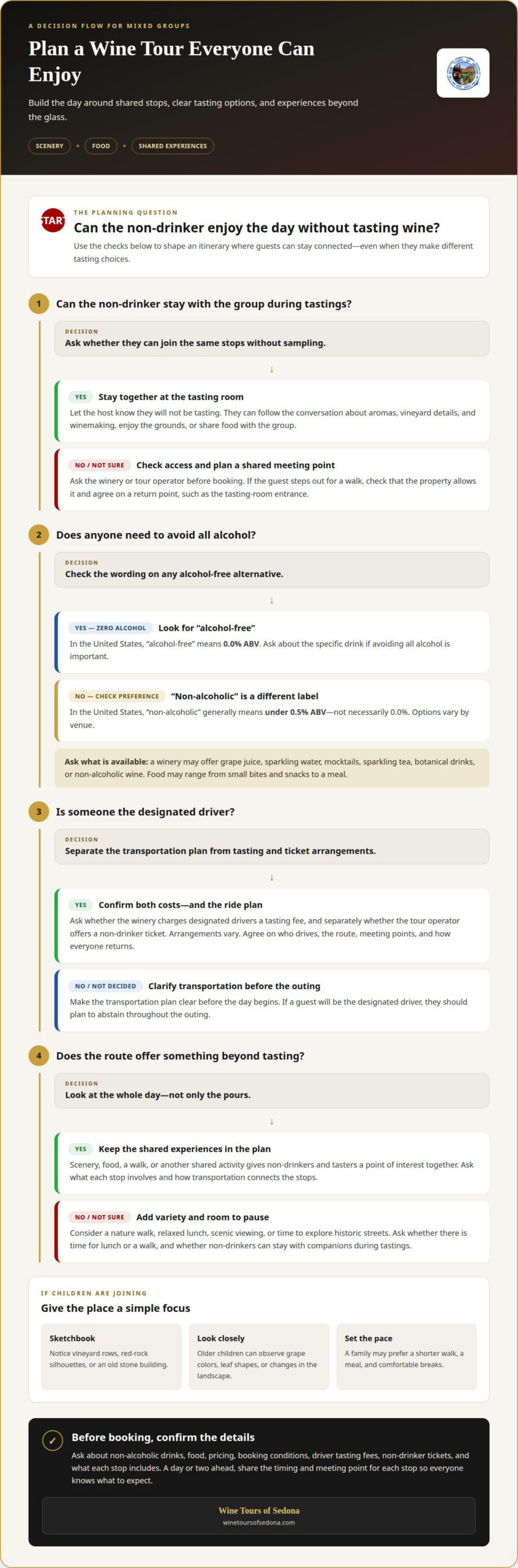
A practical way to think about how to handle a non-drinker on a group wine tour is to choose a route with shared interests beyond tasting. Look for scenery, food, or another activity alongside winery visits. Ask whether non-drinkers can join the same stops without sampling wine. This helps you assess the whole day, not just its pours.
Before booking, ask the operator what each stop involves. Will there be time for lunch, a walk, or scenic viewing? Can a non-drinker stay with companions during tastings? How does transportation connect the stops? Clear answers help you picture the day and identify gaps for guests who prefer other activities.
Build a route around shared moments, then add options for different interests. Pair a winery visit with a meal and a scenic stop, for example. Wine enthusiasts can focus on the tasting, while others enjoy the food, views, and conversation. A varied itinerary gives each stop a purpose for the whole group.
Decide together how to handle a non-drinker on a group wine tour: make tasting optional, and don’t treat participation as a test of enthusiasm. A guest can skip a pour or take a short walk while the group tastes. Set a clear meeting point and return time so no one feels hurried or left behind.
Consider the group’s pace and priorities as well as its interests. Families may value meal breaks and accessible outdoor stops; friends might prefer a longer winery visit balanced by a scenic pause. Share these preferences with the operator before booking. The itinerary can then connect wine lovers and non-drinkers through experiences everyone can enjoy.
Ready to plan a wine outing for mixed interests? Choose a route with room for tasting, scenery, and shared time together.
Wine Tours of Sedona: A Multi-Vineyard & Winery Tasting Experience
Wine Tours of Sedona offers a Multi-Vineyard & Winery Tasting Experience for guests who want to visit several wineries together. For a mixed group, consider an itinerary that pairs wine with other shared interests, such as the Sedona & Verde Valley Tour: Wine, Beer, Raw Chocolate, & Lunch. This range of experiences lets you shape the day around more than wine, with Northern Arizona’s distinctive landscapes along the way.
If your group wants a wine-centered outing, explore the multi-vineyard experience or The Terroir of the Verde Valley Wine Trail. If food and varied tastings matter more, consider the tour that includes beer, raw chocolate, and lunch. Tell Wine Tours of Sedona what your group hopes to enjoy, including non-drinkers, and contact Wine Tours of Sedona to discuss an itinerary.
Shape a Wine Day Everyone Can Look Forward To
A thoughtful way to handle a non-drinker on a group wine tour is to make the day about a shared sense of place, not a shared glass. Choose an experience that reflects what your group wants to remember: discovering vineyards, exploring the character of the Verde Valley, or spending time together over varied tastings. The right itinerary can help every guest feel included without asking anyone to change their preferences.
Wine Tours of Sedona offers A Multi-Vineyard & Winery Tasting Experience, Alcantara Estate Vineyards Tasting Experience, and The Terroir of the Verde Valley Wine Trail. Consider which experience best suits your group’s interests as you plan the day.
Take the next step with your group’s priorities in mind. Contact Wine Tours of Sedona to explore an itinerary, then look forward to a memorable day among Northern Arizona’s vineyards and landscapes.
Frequently Asked Questions
Can you visit a winery if you don’t drink alcohol?
Yes, you can visit a winery and choose not to taste wine. A winery may offer more than a flight: guests can learn about the property, notice vineyard details, enjoy a meal, or share the visit with companions. Think of it as a visit to an agricultural and hospitality setting, not solely a drinking activity. Your preferred level of participation can shape the day.
Can designated drivers join wine tours?
Yes, designated drivers can join the itinerary and take part in activities that don’t involve tasting. Wine Tours of Sedona’s experiences are private and customizable, so a group can plan around guests’ varied interests. Ask how the driver is included in the tour booking and whether any tasting-room charge applies to a non-taster. That separates the tour reservation from the winery’s own arrangements.
What can a non-wine drinker actually enjoy on a winery tour?
A non-wine drinker can enjoy the host’s explanation, the vineyard setting, food, and time with the group. Notice how rows follow the contours of a hillside, photograph the grounds, or listen for details about grape growing. At a seated tasting, the conversation and setting can still be engaging while you leave the pours untouched.
Are non-alcoholic drinks or grape juice available at wineries?
Some wineries serve non-alcoholic drinks or grape juice, but choices vary by venue. Other possibilities include sparkling water, mocktails, botanical drinks, sparkling tea, or non-alcoholic wine. In the United States, “non-alcoholic” generally means under 0.5% ABV; “alcohol-free” means 0.0%. If that distinction matters to you, ask about the particular drink rather than relying on a general description.
Can a non-drinker ride along as a designated driver on a wine tour?
Yes, a non-drinker can ride along as the designated driver and participate in the itinerary. Agree among the guests who will drive before the outing, including who will take the wheel after each stop. If the outing includes a hosted tour, the driver can join the group’s conversations and enjoy the scenery without tasting.
What are good alternatives for non-drinkers on a winery tour, such as food tastings or vineyard walks?
Good alternatives include a food-focused stop, time outdoors, or a scenic pause between winery visits. A vineyard walk offers a closer look at the landscape, while a shared meal gives everyone another common experience. For a varied outing, consider combining wineries with beer, raw chocolate, or lunch, so the day includes interests beyond wine tasting.
Recent Comments