

What if the best Sedona retreat isn’t a packed schedule, but a thoughtful rhythm of focused work and time to experience the land together? A well-shaped sedona team retreat agenda gives your group room to align on priorities while making space for red-rock scenery, local flavors, and unhurried moments that make an offsite feel distinctly Sedona.
Balancing meaningful team time with activities people will enjoy can be challenging, especially when transportation and transitions add another layer of planning. A memorable outing doesn’t have to revolve around wine: Sedona offers ways to connect through nature, chocolate, and other locally rooted experiences.
This flexible 2026 framework gives you a ready-to-adapt schedule, with prompts for meeting blocks, shared activities, and breathing room between them. It also shows where a private, customizable local experience can fit into the day. Wine Tours of Sedona’s Corporate Event Sedona Wine & Food Tour includes door-to-door pickup in Sedona and surrounding areas, helping simplify the outing as your team discovers the Verde Valley.
Key Takeaways
- Shape a sedona team retreat agenda around clear outcomes, then give focused work, shared experiences, meals, and breathing room a deliberate place.
- Use a five-step planning framework to move from team goals to a schedule that feels purposeful rather than overfilled.
- Compare work-led, balanced one-day, and extended-retreat formats to find a rhythm that suits your team and planning capacity.
- Map arrival and departure windows first, then leave room for transportation, meals, and transitions before setting session times.
- Place a private local outing after concentrated work. Wine Tours of Sedona’s Corporate Event Sedona Wine & Food Tour brings the team together around the Verde Valley.
What a Sedona Team Retreat Agenda Needs to Accomplish
Planning a team offsite in Sedona means balancing the work your group needs to do with the sense of place waiting beyond the meeting room. An effective sedona team retreat agenda gives both a clear role. It’s more than a list of sessions and excursions. It’s a sequence of purposeful work, shared experiences, meals, and breathing room that helps the team stay present from one part of the retreat to the next.
Before comparing venues or collecting activity ideas, separate essential outcomes from optional additions. Ask what should be different by the retreat’s end: clearer priorities, stronger connections across teams, recognition of recent work, or a decision that’s been difficult to make remotely. Use the answer as your filter. An activity belongs on the schedule when it supports the purpose or gives people meaningful space to connect, not just because it’s available.
A successful Sedona team retreat agenda turns a clear team objective into focused work, meaningful connection, and time to experience the destination.
Start with the retreat’s outcome, not the activity list
Choose one primary outcome first. If the goal is alignment, make room for teams to surface priorities and agree on next steps. If it’s connection, create time for colleagues to share perspectives beyond their usual roles. A celebration may call for a lighter rhythm that recognizes the work while giving people room to enjoy one another’s company.
Give each block a purpose, then label it plainly in the agenda. Attendees should be able to distinguish a working session from a social experience and understand what each is meant to accomplish. For example, a morning discussion might produce a short list of shared priorities, while an afternoon outing offers a relaxed setting for conversation. Keep optional activities separate from sessions the retreat depends on. That makes the schedule easier to adapt without losing its central aim.
Use Sedona’s setting without overloading the schedule
The red-rock landscape and nearby Verde Valley give a retreat a vivid local character, but scenery alone can’t provide structure. Sedona’s geography, arts, and culture are part of its appeal, as outlined on the Sedona, Arizona Wikipedia page. Let that sense of place inform your choices, then make sure each activity fits the team’s purpose, energy, and available time.
Build the day with transitions in mind. An offsite experience needs room for travel, gathering the group, and returning to the next commitment. Give meals enough time to feel like pauses, not agenda obstacles. Leave some unscheduled space so a thoughtful conversation can continue or attendees can reset. For more destination context, explore the Sedona Travel Guide 2026. Breathing room helps the landscape become part of the retreat, rather than another item to rush through.
Build a Sedona Team Retreat Agenda with This Step-by-Step Framework
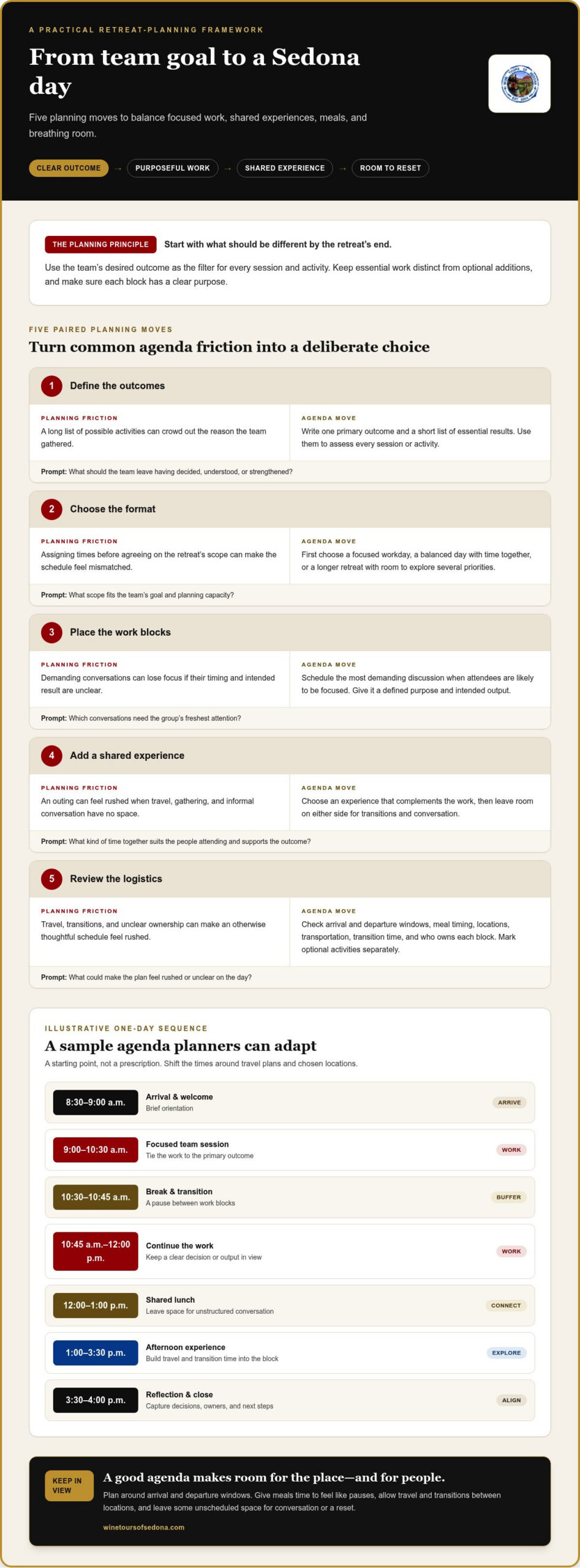
A practical sedona team retreat agenda takes shape one decision at a time. Use this sequence to protect the work your team came to do while creating room for a shared experience of Sedona and the Verde Valley. The sample times below are illustrative, not fixed. Adjust them around arrival windows, team energy, and the location of each block.
- Define the outcomes. Prompt: What should the team leave having decided, understood, or strengthened? Action: Write one primary outcome and a short list of essential results. Use these to assess every possible session or activity.
- Choose the format. Prompt: Does the group need a focused workday, a balanced day with time together, or a longer retreat with room to explore several priorities? Action: Pick a format before assigning times, so the agenda reflects the scope of the goal.
- Place the work blocks. Prompt: Which conversations require the group’s freshest attention? Action: Schedule the most demanding discussion when attendees are likely to be focused, and give it a defined purpose and intended output.
- Add shared experiences. Prompt: What kind of time together supports the outcome and suits the people attending? Action: Choose an experience that complements the work, then leave space on either side for transitions and informal conversation.
- Review the logistics. Prompt: What could make the plan feel rushed or unclear on the day? Action: Check arrival and departure windows, meal timing, locations, transportation, transition time, and who owns each block. Mark optional activities separately from essential outcomes.
A sample one-day agenda planners can adapt
Use this sequence as a starting point, not a prescription. Shift the times to fit your group’s travel plans and chosen locations.
- 8:30-9:00 a.m. Arrival, welcome, and a brief orientation.
- 9:00-10:30 a.m. Focused team session tied to the retreat’s primary outcome.
- 10:30-10:45 a.m. Break and transition.
- 10:45 a.m.-12:00 p.m. Continue the work with a clear decision or output in view.
- 12:00-1:00 p.m. Shared lunch and unstructured conversation.
- 1:00-3:30 p.m. Afternoon experience, with travel and transition time built into the block.
- 3:30-4:00 p.m. Reflection, decisions, owners, and next steps.
Transition buffers aren’t empty time. They help an offsite move from one meaningful moment to the next without making the team feel hurried.
Planning prompts for every agenda block
Keep one planning view with four details for each block: its purpose, owner, location, and transition needs. Include meals, travel, and unstructured time alongside formal sessions so the schedule reflects the whole day. This view makes it easier to spot an overloaded stretch or a missing handoff before the retreat begins.
For a shared local experience after focused work, explore Wine Tours of Sedona’s private, customizable experiences.
Choose the Right Sedona Retreat Agenda Format for Your Team
The right format depends on what your team needs to accomplish, how much time is available, and what will help attendees feel included. A compact, work-led agenda can suit a decision-focused offsite, while a balanced or extended format leaves more room for conversation and a sense of place. Choose a structure before filling in the details.
| Format | Purpose | Schedule intensity | Shared experience | Planning complexity |
|---|---|---|---|---|
| Work-led | Resolve priorities, make decisions, or align teams | High, with defined sessions and outcomes | One shorter meal or activity can create a pause | Lower, especially when centered in one location |
| Balanced one-day | Combine focused work with team connection | Moderate, alternating work and shared time | One substantial local experience complements the sessions | Moderate, with transitions and activity logistics to coordinate |
| Extended retreat | Address several goals while allowing time to connect and reflect | Varied across days, with room for lighter and more focused periods | Multiple opportunities to experience the area together | Higher, with more schedule, meal, and transport details to organize |
When a work-led or balanced agenda makes more sense
Choose a work-led structure if the retreat needs to produce decisions, resolve a specific challenge, or align teams around a shared direction. Keep sessions purposeful, and resist adding activities that crowd out the conversations the group needs. A balanced format fits when connection and shared discovery matter as much as the work. In either case, preserve time for meals, reflection, and unhurried transitions. Those pauses help attendees absorb a discussion instead of simply moving on to the next block.
Make the shared experience welcoming to varied preferences
A wine-centered activity doesn’t have to define the retreat. Treat it as one possible shared experience, not the agenda’s organizing principle. Local options include wine, beer, and raw chocolate tastings, as well as scenic outings such as hiking. Choose based on the purpose of the gathering and the preferences in your group. Don’t assume everyone wants the same kind of activity. A private, customizable outing can be shaped around the team while making the Verde Valley part of the day.
For a closer look at local tour context and the character of the region, the Sedona wine tours guide offers useful background as you weigh experiences. Whatever format you select, aim for a thoughtful rhythm: enough structure to make the retreat valuable and enough space for the team to enjoy being together.
Customize the Agenda Around Sedona Logistics and Team Needs
A thoughtful sedona team retreat agenda begins with the people arriving, not with a meeting time chosen in isolation. Collect arrival and departure windows first, then identify when the full group can realistically gather. If attendees reach Sedona at different times, make the first shared item a welcoming meal or orientation rather than scheduling a critical decision session before everyone has arrived. Build the final block around departure plans, too, so the retreat can close without anyone rushing out midway through a discussion.
Map the day as a sequence of locations, not just topics. Put transportation on the schedule as its own block, with time to gather, board, travel, and transition into the next activity. Add breathing room around meals and offsite experiences instead of treating movement between them as invisible. Private door-to-door pickup in Sedona and surrounding areas can simplify transportation planning for a group outing and reduce the separate transfers an organizer needs to coordinate.
Coordinate arrivals, transitions, and transportation
Before fixing session times, group attendees by their arrival patterns and note any shared transport needs. Then work outward from the moments when the team is together: set the opening, place the key work session, and reserve distinct travel and transition blocks around offsite plans. Wine Tours of Sedona’s private experiences include door-to-door pickup in Sedona and surrounding areas, making transportation part of the local outing plan.
Consider attendee needs as you choose activities. Check current weather and conditions before confirming an outdoor block, and account for mobility, dietary needs, and different comfort levels when planning movement, meals, or tastings. A scenic walk may suit some groups, while another may prefer a less physically demanding shared experience. Choose thoughtfully and communicate what the block involves so attendees can plan comfortably.
Keep the agenda flexible without losing its purpose
Give your schedule a firm backbone and a few flexible edges. Protect essential work sessions and their intended outcomes. Identify social blocks that can shift if conditions change or an earlier conversation needs more time. Before finalizing an outdoor plan, review current conditions and venue arrangements, including access and the timing of the group’s arrival. Assign one organizer to own schedule updates, timing, and attendee communication, so changes reach everyone clearly instead of becoming scattered messages.
For inspiration as you weigh local options, the Best Sedona Tours of 2026 can help you consider experiences for your agenda. Wine Tours of Sedona’s private outings can fit into a team plan, and you can customize a Sedona group experience to simplify the transition from focused work to time together.
Add a Private Sedona Experience to Complete Your Team Retreat Agenda
After a focused work block, a private local outing can shift the team from solving problems to sharing an experience. That change of pace gives conversations room to unfold naturally, while Sedona’s red-rock surroundings and the Verde Valley’s local character make the time together feel rooted in the destination. Place the outing thoughtfully so it complements the retreat rather than competing with its purpose.
Wine Tours of Sedona’s Corporate Event Sedona Wine & Food Tour is a private, customizable experience for teams looking to bring local flavors into their schedule. Include it as one shared block in the wider agenda, not as the theme for every meeting or activity. The experience features wine and food, and the itinerary can be shaped around the group. Tasting fees are typically included in the tour price.
Where a corporate wine and food tour fits in the run of show
Place the outing after the day’s core meeting, once the team has completed its most demanding discussion, or between a final work session and a brief closing reflection. For example, the group might agree on key decisions before departing, enjoy the shared experience, then reconvene for a concise recap of owners and next steps. Build the tour into the agenda as a flexible block, leaving room for pickup, transitions, and the group’s schedule rather than assigning an unsupported fixed duration or itinerary.
This placement protects the work while giving colleagues a relaxed setting to connect. It also makes the purpose of each part of the day clear: work time is for decisions, the outing is for shared discovery, and the closing reflection brings the retreat back to its intended outcomes.
Turn the template into a tailored Sedona outing
Before shaping the outing, bring the essentials into one planning note. A clear brief helps the experience complement the retreat and makes coordination easier.
- Team priorities: Note what the group needs from the retreat and where a shared outing fits.
- Experience preferences: Identify the kind of food, wine, or local character that feels right for your attendees.
- Pickup needs: Gather the group’s location and timing details so transportation can be reflected in the run of show.
- Schedule constraints: Account for meeting blocks, meals, transitions, and any departure windows.
Wine Tours of Sedona has served guests since 2004, with private, customizable experiences and an emphasis on local Arizona partners. Door-to-door pickup in Sedona and surrounding areas can simplify coordination for an outing, while the Verde Valley offers a distinctive backdrop for time together. If this experience fits your team’s priorities, explore a private Sedona experience as you shape an agenda that feels considered, cohesive, and unmistakably local.
Give Your Team a Clear Next Step
Before the retreat begins, turn your working plan into a simple invitation. Share the purpose of the gathering, the decisions or conversations the team will focus on, and how the shared experience fits into the day. That context helps attendees arrive ready to contribute, rather than wondering whether each moment is a meeting or an activity.
Then make the choice that gives the offsite its own character. A well-planned sedona team retreat agenda makes space for meaningful progress and the pleasure of discovering a place together. For a team outing grounded in local flavors and the Verde Valley, explore a private Sedona team experience as you shape the schedule around your group.
Give the day a clear purpose, leave room for unexpected conversations, and let Sedona’s striking landscape become part of the memory your team carries home. Your retreat can be focused, welcoming, and distinctly your own.
Frequently Asked Questions
When is the best time of year for a Sedona team retreat?
Choose dates that suit your team’s priorities and planned activities. October through May can be a starting point, not a weather guarantee. Before confirming outdoor plans, review current local forecasts and conditions, then check venue arrangements and timing constraints. If the agenda depends on a particular outdoor experience, identify an alternate date or indoor option while comparing dates.
How far in advance should we plan a Sedona team retreat?
Start planning once you have approximate dates, an attendee count, and a clear sense of the retreat’s goals. There’s no single lead time that fits every group. Lodging, meeting space, travel coordination, and offsite activities each add decisions, so more moving parts call for earlier coordination. Keep tentative items labeled as such, and share confirmed arrival details, locations, and schedule changes with attendees as they’re settled.
What should attendees pack for a Sedona work retreat?
Send a short packing note based on the actual itinerary, season, and planned activities. For a day that includes meetings and an outdoor stop, suggest work essentials, comfortable walking shoes if the activity calls for them, and layers for changing conditions. Avoid asking attendees to bring specialized gear unless the plan requires it. A clear agenda lets people prepare for the day without packing for activities they won’t be doing.
Can a Sedona team retreat accommodate employees with different mobility needs?
Yes. Build accessibility and comfort into planning from the start by inviting attendees to share relevant needs privately, then account for them when choosing spaces, transportation, and activities. If a planned outing involves uneven terrain or extended walking, consider a different format or an engaging alternative. Allow time for transitions, and make clear that meaningful participation doesn’t depend on completing a strenuous activity.
Do team members need to rent a car for a Sedona retreat?
Not necessarily. It depends on where attendees are staying and how the schedule connects its locations. Include transportation in the plan instead of assuming people can travel independently. For teams arriving from Phoenix, Tempe, Scottsdale, Los Angeles, Las Vegas, or Dallas, communicate local arrival and outing arrangements separately from their travel to Sedona. Wine Tours of Sedona provides door-to-door pickup in Sedona and surrounding areas for local outings.
How can we keep a team retreat agenda from feeling over-scheduled?
Give each block a specific reason to stay on the calendar, then leave visible gaps for conversation, meals, and transitions. Mark essential sessions separately from optional social plans. If the day feels crowded, move an optional block rather than squeezing out every pause. In your sedona team retreat agenda, reserve the final few minutes for decisions, owners, and follow-up so the group leaves with clarity.
What if the weather changes during an outdoor Sedona retreat activity?
Prepare an alternate version of the schedule before the event, such as an indoor discussion or a lower-exertion activity that still supports the retreat’s purpose. Check local forecasts close to the date, review relevant venue arrangements, and tell attendees promptly if plans change. Keep the decision process simple by assigning one organizer to communicate updates. An outdoor block may need to move or change format, so avoid making it essential to the retreat’s outcomes.
Recent Comments