
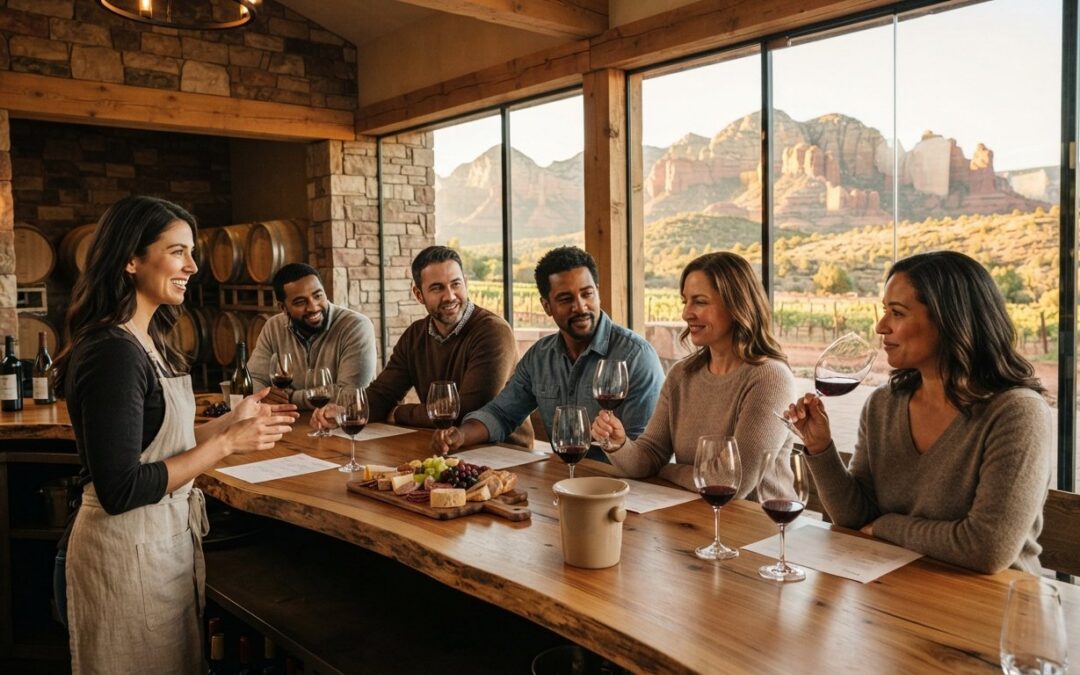
What if the secret to wine tasting etiquette for beginners isn’t memorizing obscure vintage notes, but simply showing up with curiosity and presence? It’s completely natural to feel a spike of anxiety at the cellar bar, wondering whether you should spit or swallow, how to cradle the stem, or if asking a simple question exposes you as a novice. You aren’t alone in feeling hesitation when a host pours a rich vintage and quietly waits for your verdict.
Tasting room decorum isn’t about stiff perfection; it’s mindful sensory immersion and mutual appreciation for the craft in your glass. This guide will help you embrace every pour with effortless confidence, teaching you how to evaluate wine through the classic five S framework, navigate tipping norms, and ask questions with poise. Ahead, you’ll discover the unwritten customs of the tasting room so you can relax, connect with the artisan story behind each pour, and savor every moment.
Key Takeaways
- Demystify cellar culture by understanding that tasting decorum centers on genuine sensory curiosity rather than intimidating expertise.
- Master the foundational 5 S framework, establishing a seamless baseline of wine tasting etiquette for beginners from your first swirl to the final savor.
- Navigate subtle tasting room customs with poise, from avoiding overpowering fragrances to using dump buckets comfortably.
- Handle tipping, pacing, and bottle fee waivers with complete confidence at the counter.
- Explore how private guided tasting journeys eliminate driving logistics and counter crowding for an intimate, elevated vineyard immersion.
What Is Wine Tasting Etiquette? Demystifying the Cellar Experience
Stepping across the threshold of a sunlit tasting room shouldn’t feel like walking into an exclusive examination. True wine tasting etiquette for beginners isn’t a rigid playbook designed to trip you up; it is an intuitive framework designed to heighten your personal senses and honor the craft behind the vintage. Across boutique viticultural havens like Arizona’s Verde Valley, cellars aren’t classrooms for pretension. They are sanctuaries of hospitality where winemakers translate sun, volcanic soil, and seasonal weather into liquid poetry, hoping simply to share that passion with curious souls.
A tasting room operates on an entirely different rhythm than a bustling downtown pub. Unlike a standard social drinking environment where glasses are drained between loud conversations, a cellar encounter invites reflective pacing. Each step serves a functional purpose, as outlined in the five basic steps in tasting wine, helping you isolate delicate aromatics before the palate grows fatigued.
The Distinction Between Tasting and Drinking
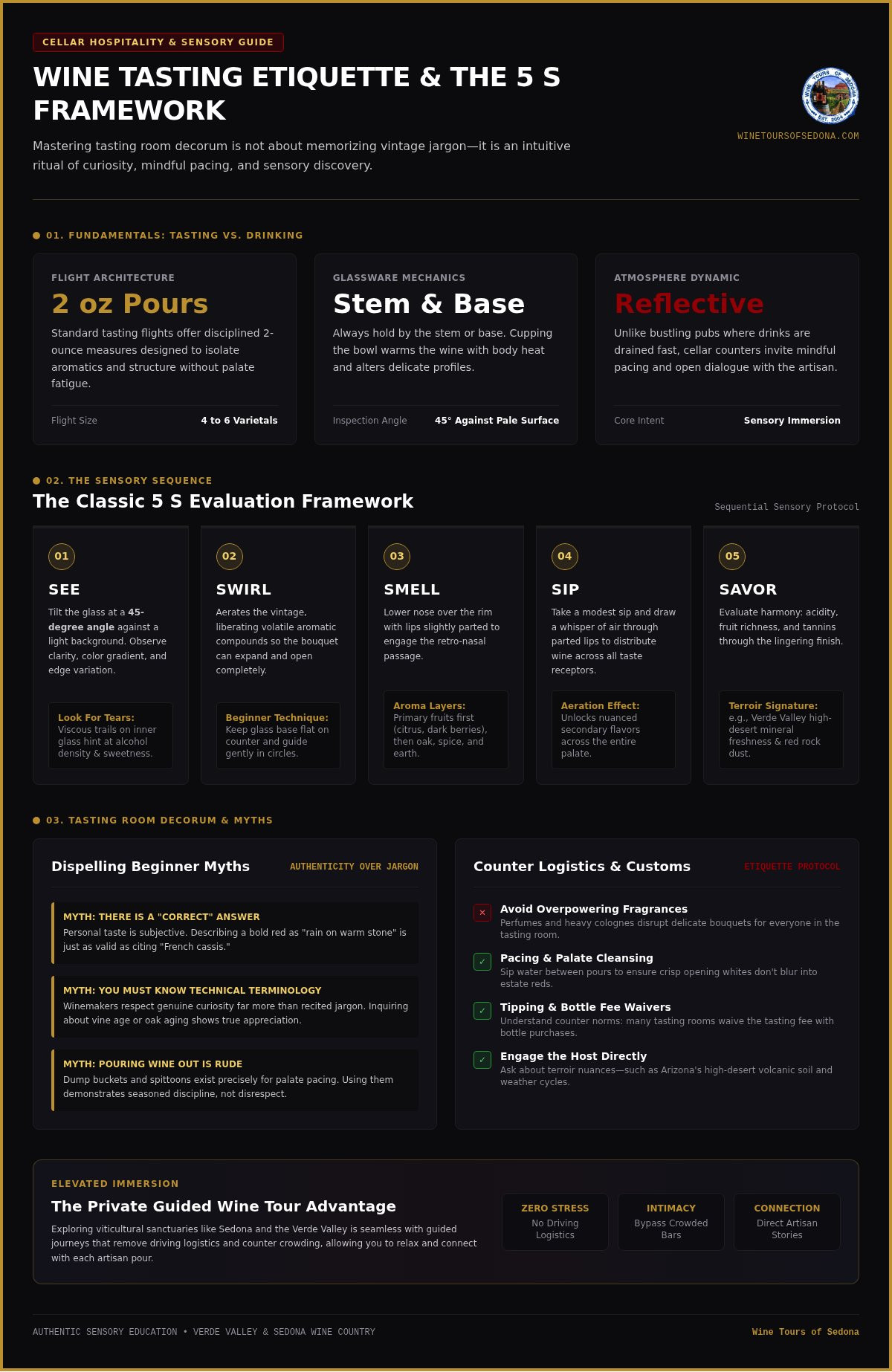
Mindful appreciation defines the cellar experience. Standard tasting flights typically offer disciplined two-ounce pours, precisely measured to let you evaluate color, structure, and terroir without overwhelming your senses. Sipping slowly preserves your palate across a flight of four to six varietals, ensuring that the bright acidity of an opening white doesn’t blur into the robust tannins of an estate red.
Dispelling Common Beginner Myths and Intimidation
You don’t need a sommelier’s lexicon to belong at the bar. Personal taste is entirely subjective, and winemakers respect honest reactions far more than recited jargon. You can easily unlock the rich story of any pour by leaning into open dialogue:
- No “correct” answers: If a bold red reminds you of rain on warm stone rather than French cassis, your perception is valid.
- Curiosity over technical mastery: Asking simple questions about vine age or oak aging shows respect for the artisan’s journey.
- A welcoming atmosphere: Mastering foundational wine tasting etiquette for beginners simply means listening, lingering over aromas, and treating the tasting room as an open invitation to explore.
The 5 S Framework: How to Taste Wine with Poise and Confidence
Confidence at the cellar counter begins with understanding that your senses work as an interconnected team. Rather than an arbitrary test of decorum, the classic five S method, spanning See, Swirl, Smell, Sip, and Savor, serves as an intentional pathway to unpack the craft inside your glass. Adopting this structured approach transforms basic wine tasting etiquette for beginners into a fluid, graceful ritual that honors both the vintage and the soil. Academic studies in the sensory evaluation of wine show that isolating visual, olfactory, and gustatory impressions sharpens your palate and deepens appreciation for balance and varietal typicity.
Visual Inspection and Proper Glassware Handling
Always hold your glass firmly by the stem or the base rather than cupping the bowl. Resting warm palms against the glass elevates the liquid’s temperature, disrupting the delicate profiles of crisp whites or balanced reds while leaving distracting fingerprints. Tilt your glass at a forty-five-degree angle against a pale surface to observe clarity and edge variation. Viscous trails sliding down the inner glass, often called tears or legs, hint at alcohol density and sweetness.
Mastering the Swirl and Aromatic Assessment
Swirling aerates the vintage, liberating volatile aromatic compounds so the bouquet opens completely. If you don’t feel steady swirling in midair, place the base flat on the counter and gently guide it in circular motions. Lower your nose directly over the rim with your lips parted slightly, which engages the retro-nasal passage. Pinpoint primary fruit categories first, such as dark berries or citrus, before identifying subtle layers of toasted oak, baking spice, or stony earth.
Sipping, Aerating, and Savoring the Finish
Take a modest sip and draw a whisper of air through your lips to coat your entire palate. This aeration unlocks nuanced secondary flavors while distributing the wine across every taste receptor. Notice how structural elements like acidity, fruit richness, and tannins balance out through the finish. Enthusiasts experiencing wine tasting in Sedona often notice a distinct mineral freshness and red rock dust character that defines high-desert viticulture.
If you’d like to hone these sensory rituals without feeling rushed at crowded counters, booking a private adventure with Wine Tours of Sedona offers a tranquil environment tailored for relaxed discovery.
Tasting Room Decorum: Unwritten Rules of the Counter
Cellar spaces hum with a delicate sensory balance. When you stand at an estate counter, you share an aromatic environment with fellow guests and dedicated hosts whose senses are finely tuned to every vintage. Honoring this shared space is the cornerstone of wine tasting etiquette for beginners. By observing a few unwritten customs, you protect the aromatic purity of the room while moving through each flight with natural ease.
Olfactory Courtesy and Appropriate Attire
Olfactory awareness represents the most vital rule in any tasting salon. Strong perfumes, musky colognes, and heavily scented lotions easily overwhelm subtle notes of wild sage, stone fruit, and toasted cedar, effectively blinding your nose and dulling the senses of everyone nearby. Skip chewing gum and mints beforehand, as lingering menthol alters wine acidity. Dress in smart-casual layers that suit cool barrel rooms and warm vineyard terraces alike, choosing darker tones that gracefully withstand stray splashes.
The Art of the Dump Bucket and Spittoon
Newcomers often worry that discarding wine insults the winemaker. In truth, cellar staff view spitting and pouring out surplus wine as professional, thoughtful decorum. Emptying your glass into the provided dump bucket or spitting into a designated vessel keeps your mind clear across a flight of four to six distinct pours. Here is how to handle the process gracefully:
- Lean in close: Lower your head toward the spittoon or discard vessel rather than aiming from a distance.
- Expel gently: Discharge smoothly and deliberately to prevent splashing the counter or your companions.
- Rinse between flights: Swish a sip of room-temperature water or nibble a neutral cracker to reset your palate without scrubbing away natural flavor perception.
Engaging Your Server and Asking Thoughtful Questions
Pourers love working with engaged visitors who show genuine curiosity. Inquire about the vineyard’s elevation, sun exposure, or whether a vintage saw neutral or new French oak. If a particular pour doesn’t suit your palate, phrase your reaction kindly by noting that you prefer higher acidity or softer tannins. That respectful feedback helps your host steer you toward bottles you will truly adore while maintaining a calm, conversational volume that honors neighboring tables.
Practical Logistics: Pacing, Tipping, and Purchasing Protocol
Cellar visits carry subtle business customs alongside their sensory pleasures. Wondering how much to tip, whether buying a bottle forgives your flight cost, or how many stops to schedule in an afternoon can trigger needless worry. Grasping these practicalities rounds out proper wine tasting etiquette for beginners, ensuring you settle tabs gracefully and protect your physical stamina throughout the day.
Navigating Tipping and Waived Flight Fees
Cellar educators dedicate genuine care to pouring your flight, making gratuity a customary recognition of great hospitality. For walk-up counter tastings, leaving five to ten dollars per person or one to two dollars per pour shows warm appreciation. If you reserve a seated experience accompanied by artisan cheese boards or food pairings, tipping fifteen to twenty percent reflects fine restaurant standards. When an estate educator shares deep viticultural lore that transforms your visit, offering ten to twenty dollars per person honors their expertise.
Keep these purchasing guidelines in mind at the register:
- Waived tasting charges: Many estates waive one flight fee if you buy a minimum number of bottles, typically two to three per guest.
- Zero obligation: Never purchase bottles out of sheer politeness. If a flight doesn’t resonate with your palate, thank your host, pay the standard flight fee, tip generously, and move forward comfortably.
Palate Longevity and Responsible Daily Pacing
Fatigue ruins great wine. Capping your itinerary at three estate wineries per day preserves your palate, keeping your senses lively from your opening pour to the final barrel sample. Pair every glass of wine with an equal glass of room-temperature water. Alcohol and dry estate air quickly dehydrate your mouth, altering tannin perception and dulling subtle fruit notes.
Schedule a leisurely midday pause between cellars to savor a nourishing, protein-rich lunch. Grounding your system amid the natural splendor of the vines keeps your energy balanced. If you’re designing your Northern Arizona itinerary, consult an authoritative sedona travel guide to harmonize scenic canyon exploring with unhurried cellar afternoon visits.
Skip the stress of navigating rural roads or managing individual tasting tabs entirely by booking a bespoke excursion with Wine Tours of Sedona, where every reservation detail is handled seamlessly on your behalf.
Elevating the Experience: The Private Guided Wine Tour Advantage
Cellar visits should evoke a sense of unhurried wonder rather than logistical fatigue. Mastering wine tasting etiquette for beginners becomes effortless when the administrative friction of the day simply disappears. Instead of negotiating winding canyon roads, hunting for parking spaces, or assigning an unfortunate designated driver, a private chauffeured excursion transforms your viticultural day into a seamless retreat. Every transition between estate terraces feels purposeful, calm, and deeply restorative.
Bespoke Itineraries Tailored to Your Palate
Large commercial bus tours rush visitors through rigid tasting flights, but a bespoke itinerary adapts completely to your rhythm. Beginners can linger over aromatic subtleties, ask cellar masters candid questions, and discover boutique estates shaping regional winemaking. Thoughtfully curated sedona wine tours weave together the majesty of towering red rock formations with intimate estate access across the Verde Valley. Rather than waiting in line at crowded standing bars, you settle into reserved seated tastings where winemakers share the soul behind each bottle.
Seamless Door-to-Door Luxury and Relaxation
True luxury begins the moment your private vehicle arrives at your resort, private villa, or boutique hotel. Traveling with dedicated door-to-door transit frees your entire party to sample complex flights without transportation concerns. Professional guides manage tasting schedules, reservation confirmations, and route planning on your behalf, removing counter confusion and payment friction. This attentive service allows beginner apprehension to melt away, replacing hesitation with authentic confidence and a profound appreciation for the vine.
Step Into the Tasting Room with Poise and Presence
Refining your understanding of wine tasting etiquette for beginners opens the door to genuine sensory discovery. When you master the five S framework, respect the aromatic cellar environment, and pace your pours thoughtfully, intimidation quickly fades into joy. Tasting fine wine isn’t an exclusive test; it’s an intimate dialogue with the land and the passionate artisans who nurture each cluster.
If you’re ready to experience Northern Arizona’s boutique estates without the stress of winding roads, counter crowds, or transit logistics, let dedicated local guides elevate your journey. Locally owned and passionately operated by Jim Reich since 2004, Wine Tours of Sedona provides fully customized private luxury itineraries featuring door-to-door transportation and seamlessly pre-arranged cellar appointments. Reserve Your Private Sedona Wine Tour Experience today and savor the vibrant spirit of the Verde Valley with effortless confidence.
Frequently Asked Questions
Do I have to drink every pour during a wine tasting flight?
No, you don’t have to finish every pour during a flight. Tasting flights are designed for sensory exploration rather than high-volume consumption. With standard pours measuring approximately two ounces each, sampling four to six wines adds up quickly. Discarding unfinished wine into the provided dump bucket is standard cellar protocol that preserves your palate and maintains moderation throughout your afternoon.
How much should you tip at a winery tasting room?
Tipping reflects the level of hospitality and personal education you receive at the counter. For standard bar tastings, offering five to ten dollars per guest or one to two dollars per pour is customary. Seated flights featuring artisan food pairings warrant a fifteen to twenty percent tip, mirroring fine dining standards. If an estate educator shares exceptional viticultural knowledge, ten to twenty dollars per person honors their time.
Is it rude to spit wine into the dump bucket?
Spitting into a dump bucket is never rude; cellar staff view it as professional, thoughtful tasting decorum. Discreet spitting keeps your mind sharp and prevents sensory fatigue as you move across distinct estate varietals. Simply lean close over the vessel and discharge smoothly without splashing. Using dump vessels comfortably is an essential mark of wine tasting etiquette for beginners who want to savor wines responsibly.
What should I wear to a winery or tasting room visit?
Choose smart-casual attire that balances countryside elegance with practical outdoor comfort. Darker clothing or subtle patterns gracefully disguise accidental splashes of red wine. Comfortable flat shoes or boots are ideal for walking across gravel driveways, stone patios, and cool cellar rooms. Most importantly, avoid wearing perfumes, colognes, or scented lotions, as heavy aromas disrupt delicate wine bouquets for everyone in the tasting salon.
Can I visit wineries if I don’t know anything about wine?
Yes, wineries enthusiastically welcome novices, valuing genuine curiosity far more than prior technical knowledge. Whether you are visiting locally from Phoenix and Scottsdale or traveling from Dallas and Los Angeles, cellar hosts love introducing newcomers to regional vines. Embracing wine tasting etiquette for beginners simply requires listening, asking questions about what you taste, and trusting your own palate without worrying about pretentious vocabulary.
Why do wine experts hold the glass by the stem?
Holding a wine glass exclusively by the stem preserves the proper serving temperature of the vintage. Cupping the bowl transfers body heat from your palm directly into the wine, which can mute crisp acidity and overemphasize alcohol heat. Grasping the stem or base also keeps the crystal clear of oily fingerprints, ensuring you can visually assess the wine’s hue, clarity, and viscosity against the light.
How many wineries should a beginner visit in a single day?
Limiting your excursion to two or three estate wineries per day creates the most rewarding sensory journey. Palate fatigue sets in quickly after multiple tastings, making it difficult to appreciate subtle aromatic notes late in the afternoon. Scheduling three unhurried stops leaves ample room to linger over estate views, enjoy a leisurely lunch, and absorb the unique character of each vineyard without feeling rushed.
Recent Comments