
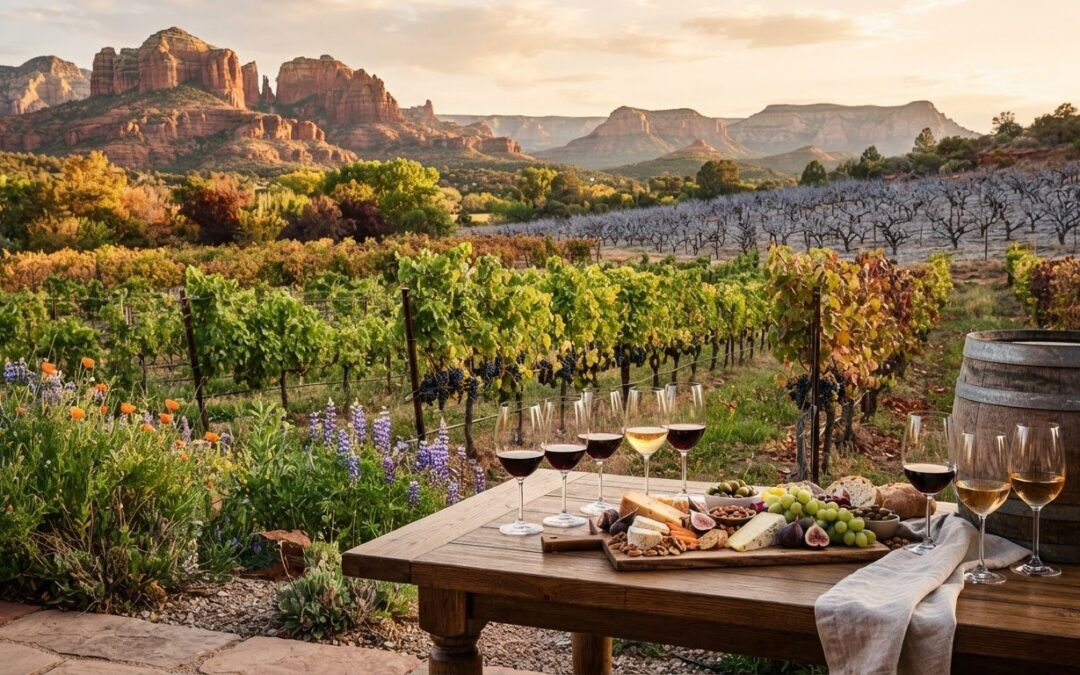
What if the best time for Arizona wine tasting isn’t the same across the state, or even for every traveler? The best time of year for arizona wine tasting depends on what you want from the day: comfortable patio weather, spring wildflowers, harvest-season atmosphere, or a quieter visit among dormant vines. Arizona’s wine regions have different elevations, climates, and seasonal rhythms, so there’s no single ideal month for every trip.
This guide compares spring, summer, fall, and winter to help you choose dates that suit your priorities and set realistic expectations for scenery, weather, and vineyard activity. The Verde Valley near Sedona feels different from the higher-elevation Sonoita region and the high-desert vineyards of Willcox. Use the seasonal overview to narrow your options, then check local forecasts, winery schedules, and event dates before you finalize plans. Whether you’re drawn to mild days, harvest activity, or an unhurried tasting, you can build a Northern Arizona itinerary around the experience you want.
Key Takeaways
- The best time of year for arizona wine tasting depends on your priorities, from comfortable outdoor visits to harvest-season activity or a quieter pace.
- Compare the Verde Valley, Sonoita, and Willcox by landscape, elevation, and seasonal feel rather than assuming conditions are alike.
- Use the seasonal guide to weigh each time of year’s appeal against practical considerations, including summer heat and possible monsoon storms.
- Plan in order: choose your priorities, select a region, review winery schedules and local event dates, then shape your tasting day.
- A private Sedona tour can bring tastings and scenic stops together in a customizable itinerary, with each reservation kept private.
What Is the Best Time of Year for Arizona Wine Tasting?
There’s no single season that suits every Arizona wine trip. The best time of year for arizona wine tasting depends on where you’re going and what you want the day to include: time outdoors in comfortable weather, vineyard views during the growing season, a chance of seeing harvest activity, or a quieter tasting-room visit. A winery visit and a vineyard visit aren’t quite the same experience. Tasting rooms can offer a rewarding stop when vines are dormant, while vineyard scenery and activity change throughout the year.
To choose dates that fit, weigh four factors: weather, scenery, vineyard activity, and visitor pace. These can point to different dates, even within one trip. You might prioritize comfortable conditions for scenic stops, while another traveler may be more interested in harvest atmosphere. Seasonal patterns are useful for planning, but they don’t guarantee what you’ll find at a particular winery.
Arizona wine-tasting seasons vary because the state’s regions differ in elevation, landscape, and local growing conditions, shaping the weather, vineyard scenery, and pace of a visit.
Why Arizona wine-tasting advice depends on the region
Sedona and the Verde Valley make a scenic setting for a tasting day, with red-rock country and wineries near the Verde River corridor. Sonoita’s high-elevation grasslands and Willcox’s high-desert vineyards offer different landscapes and trip contexts. Arizona’s wine regions include three AVAs, Sonoita, Willcox, and Verde Valley. The Arizona wine industry overview provides background on the state’s viticultural regions and grape varieties.
That variety is why a statewide forecast or a simple “spring is best” recommendation can’t describe conditions at every winery. Even within one region, the view from a tasting room may differ from the scene among the vines, and vineyard activity changes with the season. Use general seasonal guidance to narrow your choices, then consider the specific region and experience you’re planning.
What travelers mean by the “best” time to visit
For some travelers, “best” means comfortable outdoor touring and time to enjoy the landscape between tastings. For others, it means visiting during the grape-growing season or hoping to glimpse harvest work. Spring may bring wildflowers, while fall can coincide with harvest, but neither guarantees a particular activity or view at every vineyard. In winter, dormant vines create a quieter, more open landscape.
Your preferred pace matters, too. A festival or local event can add energy to a visit, while travelers seeking a more relaxed day may prefer dates without major events. Seasonal conditions also affect how much time you may want to spend outdoors. Decide what kind of experience you want first, then compare the seasons and regions that suit it. The next sections cover spring, summer, fall, and winter to help you match your dates to the wine-country day you have in mind.
How Arizona’s Wine Regions Shape the Best Season for Tasting
Arizona wine country isn’t one continuous climate or landscape. Elevation, terrain, and local weather give each region its own character, so a date that feels comfortable for a Verde Valley tasting day may feel different in southern Arizona. Consider Arizona’s wine regions individually, because elevation, landscape, and local conditions shape each visit in different ways.
This distinction helps you decide whether to plan around Northern Arizona’s red-rock scenery or explore the southern wine regions. The best time of year for arizona wine tasting depends partly on that choice, as well as on whether you’re looking for outdoor comfort, vineyard views, or a particular seasonal atmosphere.
Sedona and the Verde Valley: tasting among red rocks and vineyards
Based near Sedona, the Verde Valley offers a tasting experience shaped by high-desert scenery, red-rock formations, and nearby vineyards. The surroundings can be part of the day, but conditions vary by season, and a scenic drive doesn’t guarantee a particular view or vineyard activity. For a regional orientation, this Sedona wine-tours guide explores the connection between Sedona and Verde Valley wine country.
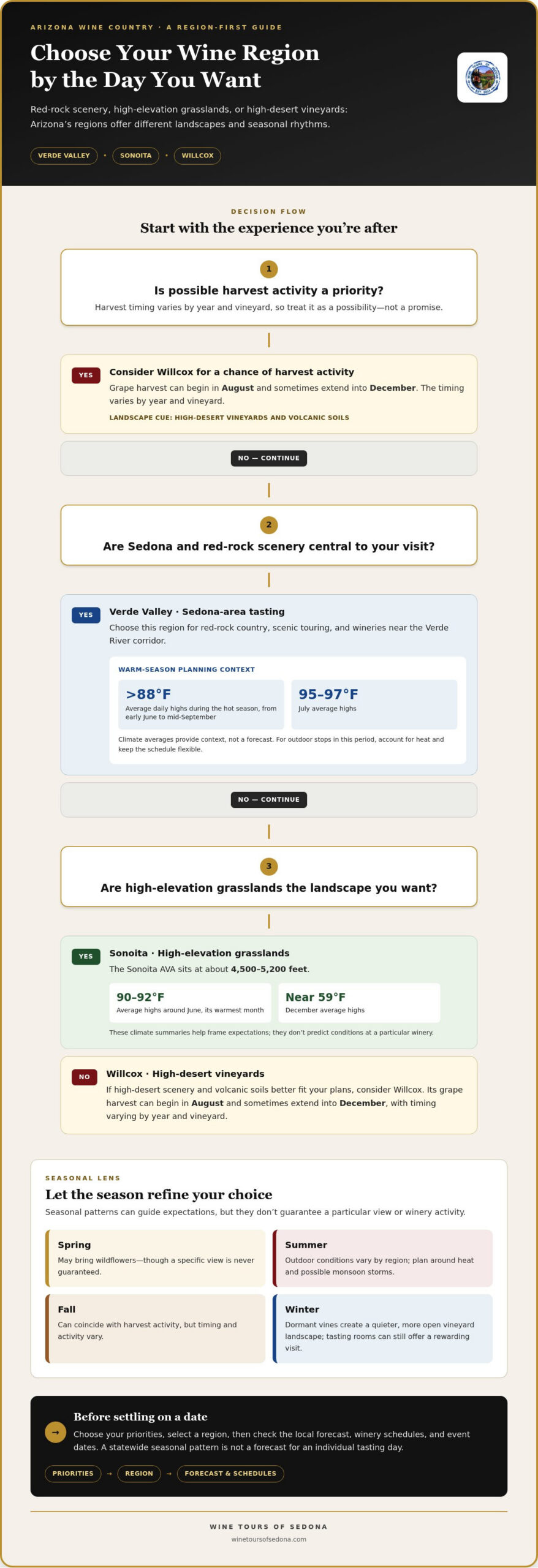
Climate averages offer context, not a forecast for a specific tasting date. WeatherSpark’s Verde Valley climate summary describes a hot season from early June to mid-September, with average daily highs above 88°F and July averages of 95-97°F. If you’re planning outdoor stops during that period, account for the heat and keep your schedule flexible.
Sonoita and Willcox: distinct southern Arizona wine-country visits
Sonoita and Willcox are both important Arizona wine destinations, but they shouldn’t be treated as interchangeable stops. The Sonoita AVA sits at about 4,500-5,200 feet, while Willcox is known for high-desert vineyards and volcanic soils. Differences in elevation and landscape contribute to each region’s distinct sense of place.
Climate summaries from MyPerfectWeather describe Sonoita’s warmest month, June, with average highs around 90-92°F, and December highs near 59°F. These figures help frame expectations, but they don’t predict conditions at a particular winery. In Willcox, grape harvest can begin in August and sometimes extend into December, though timing varies by year and vineyard. Treat harvest activity as a possibility, not a promise.
To compare the regions, decide whether scenic touring, vineyard activity, or a particular regional event matters most to you. Then check local forecasts, winery schedules, and event calendars close to your travel dates. If Sedona and the Verde Valley are your focus, a private, customizable Sedona wine tour can bring tastings and scenery together at a pace tailored to your day.
Arizona Wine Tasting by Season: Spring, Summer, Fall, and Winter
Each season gives Arizona wine country a different mood, but the experience depends on the region, winery, and what you want from the day. This guide compares broad seasonal patterns, not guarantees. A tasting room may be open while vineyard activity changes, and local weather can differ across the state. Use the table to narrow your dates, then check winery schedules and local forecasts as your trip approaches.
| Season | General feel | Likely appeal | Planning cautions |
|---|---|---|---|
| Spring | Fresh landscapes and changing vineyard activity | Potential wildflowers, outdoor tastings, and spring events | Bloom timing and weather vary by region and year; confirm event dates. |
| Summer | Bright, hot days, with monsoon weather in parts of the season | Seeing vines during the growing season and dramatic skies | Plan for heat; afternoon storms can develop during the monsoon, June 15 through September 30. |
| Fall | A transition into harvest season in some vineyards | Harvest atmosphere, changing scenery, and seasonal festivals | Harvest generally runs August through September, sometimes later, but timing is vineyard-dependent. |
| Winter | Dormant vines and a more subdued landscape | A different view of wine country and a potentially quieter visit | Don’t assume wineries are closed or less busy; check hours, events, and conditions. |
Spring and summer: outdoor scenery and vineyard activity
Spring can bring wildflowers and agreeable outdoor days, while some wineries may be occupied with bottling. Neither blooms nor vineyard work is guaranteed on a particular date. Summer offers a chance to see vines during their growing season, but heat and monsoon storms can shape outdoor plans. Arizona’s monsoon officially runs from June 15 to September 30, with heavier rainfall typically in July and August. If you visit in summer, check the forecast and allow flexibility around outdoor stops.
Fall and winter: harvest atmosphere or a quieter landscape
Fall draws travelers hoping to experience harvest season, which generally spans August and September and can continue later in some areas. Actual picking dates vary with region, grape variety, and year, so a fall trip doesn’t guarantee a vineyard visit or harvest activity. In winter, dormant vines reveal a spare, restful landscape. Tasting rooms may still welcome visitors, but schedules and crowd levels vary.
So, what is the best time of year for arizona wine tasting? Let your preferred atmosphere lead. Choose spring or fall if outdoor scenery is a priority, summer if you’re comfortable planning around heat and possible storms, or winter if dormant vines appeal to you. Then match those preferences to your destination and check winery calendars close to your visit. The season sets expectations, while the region and date shape the experience.
Choose Your Arizona Wine-Tasting Dates with This Practical Checklist
A rewarding wine-country day begins with more than choosing a month. Decide what you want to see and experience, then match your dates to a region and the practical details of your visit. Follow this sequence to turn seasonal preferences into a plan while leaving room for changes in weather and winery schedules.
- Choose your priority. Is outdoor scenery the main draw, or are you hoping to see seasonal vineyard activity? Perhaps you’d rather leave room for relaxed tastings and a slower pace. Naming your priority helps you choose dates without treating any one season as universally ideal.
- Select a region. For red-rock scenery paired with nearby wine experiences, consider a Sedona and Verde Valley base. Sonoita and Willcox offer distinct southern Arizona wine-country settings. Choose the landscape that suits your trip instead of assuming the regions share the same weather or seasonal calendar.
- Check dates close to travel. Review current winery hours, reservation information, local event calendars, and the forecast before finalizing plans. Tasting-room availability, vineyard activity, and event schedules can vary, so a seasonal pattern isn’t a guarantee. For a broader look at planning a visit, the 2026 Sedona travel guide can help you place wine country within a wider destination itinerary.
- Shape the day. Once dates and region are settled, arrange your stops around travel time, tasting-room hours, and your preferred pace. Leave enough flexibility for changing conditions or a schedule adjustment.
Match the season to your preferred wine-country experience
Think of your season as the mood of the trip. If you’re seeking time outdoors, consider how the local forecast may affect scenic stops. If vineyard activity is the draw, remember that growing and harvest calendars vary by region and winery. For a gentler pace, leave breathing room between visits instead of filling every part of the day. A flexible itinerary helps you enjoy the experience without rushing.
Choosing Sedona or the Verde Valley also lets you combine winery visits with the region’s striking scenery. If that’s your plan, this Sedona wine-tasting guide offers more context for exploring the area.
Build a realistic tasting-day itinerary
Allow time to travel between stops and enjoy each tasting without watching the clock. Before you go, use current official winery information to check hours, reservation details, and any seasonal events you hope to attend. Avoid packing the day so tightly that a change in weather or timing disrupts the whole itinerary. A few well-chosen stops leave more room to savor the wine and landscape.
Ready to turn your preferred dates into a personalized Northern Arizona outing? Plan a private, customizable Sedona wine tour with an itinerary shaped around tastings and scenery.
Experience Arizona Wine Country with a Private Sedona Tour
Once you’ve weighed the seasons and regions, choose a plan shaped around the kind of day you want. Wine Tours of Sedona offers private Northern Arizona experiences, with every reservation kept private to its party and itineraries customized to guest interests. Balance winery visits with time for Sedona’s distinctive scenery rather than following a fixed schedule.
A private itinerary shaped around your season and interests
Start with what matters most: a particular seasonal atmosphere, scenic stops between tastings, or a leisurely pace with room to linger. Wine Tours of Sedona can customize winery visits and start times to your plans, with the itinerary bringing together wine tasting and other experiences such as beer, raw chocolate, or lunch. Vineyard activity depends on the season, so plan around the experience you want rather than expecting a particular behind-the-scenes moment.
Quality over quantity leaves more space to appreciate each tasting and the changing Northern Arizona landscape, whether your visit falls during a verdant stretch of the growing season or a quieter winter scene. Wine tasting fees are included in the tour price; any wine you choose to purchase is separate. Complimentary pickup anywhere in Sedona helps your day begin smoothly without adding a drive to the first stop.
Plan your Northern Arizona tasting experience
The best time of year for arizona wine tasting comes down to the season, the region, and the experiences you value most. Once you’ve chosen dates, winery visits and scenic stops can be arranged into a flexible day that reflects your priorities. You can also include other interests, such as a meal or a complementary activity, while keeping the wine-country experience at the heart of the plan.
Wine Tours of Sedona has been creating personalized Northern Arizona tours since 2004. Each reservation is private, itineraries are customizable, wine tasting fees are included, and Sedona pickup is complimentary. To pair your preferred season with a personal tasting-day itinerary, Explore private Wine Tours of Sedona and start planning your day among the vineyards and red rocks.
Choose Your Dates and Begin Your Sedona Wine-Country Escape
The ideal tasting day isn’t simply a date on a calendar. It’s when your preferred pace, the landscape you’re drawn to, and the feeling you want to take home come together. The best time of year for arizona wine tasting is the season that makes room for your kind of discovery, whether that means sunlit views, a sense of seasonal change, or an unhurried afternoon shaped by good conversation.
As you plan, picture the whole day beyond the tasting room: the roads winding through Northern Arizona, the colors of the surrounding terrain, and the stops you’d be happiest lingering over. Keep your plans open to the character of the season and let your interests guide the experience rather than chasing a supposedly perfect month.
When you’re ready to turn that vision into a day among Sedona’s red rocks and nearby wine country, explore a private, personalized Wine Tours of Sedona. Choose a date that feels right and start planning your Arizona tasting experience.
Frequently Asked Questions
What is the best month for wine tasting in Arizona?
There isn’t one best month for every region or traveler. March through May and September through November are often appealing for milder outdoor conditions, but your ideal date depends on scenery, vineyard activity, and pace. If you’re traveling to Sedona from Phoenix, Tempe, Scottsdale, Los Angeles, Las Vegas, or Dallas, factor in your arrival plans and travel time before choosing a tasting date.
Is fall the best time to visit Arizona wineries?
Fall can be an excellent choice if you’re interested in harvest-season atmosphere, but it isn’t automatically best for every visitor. Harvest timing differs by vineyard and region, and a fall tasting doesn’t guarantee you’ll see grapes being picked or winemaking in progress. If a particular activity is central to your trip, use current winery information to set expectations, then choose a date that also suits your preferred weather and travel pace.
Can you go wine tasting in Arizona during the summer?
Yes, summer tastings are possible, though heat can affect how much time you’ll want to spend outdoors. In the Verde Valley, the hot season generally runs from early June to mid-September; July average highs are 95-97°F, according to WeatherSpark’s regional climate data. Arizona’s monsoon season runs June 15 through September 30, and afternoon storms can develop quickly. Check the local forecast and plan outdoor stops with flexibility.
What happens at Arizona vineyards during winter?
Vines become dormant, so vineyard rows may look more open and less leafy than during the growing season. That changes the scenery, not necessarily the tasting opportunity: dormant vines don’t mean a winery has closed. Winter can suit visitors who enjoy a quieter-looking landscape and prefer to focus on tasting rooms, local food, or nearby scenery. Winery hours and available experiences vary, so check current schedules before setting out.
When is grape harvest season in Arizona wine country?
Arizona’s grape harvest generally takes place from August through September, though some vineyards harvest later. In Willcox, the season can begin in early August and sometimes continue into December. Timing shifts with region, grape variety, and growing conditions, so a calendar range can’t confirm activity at an individual vineyard. If harvest is a priority, look for current information from wineries in your chosen region rather than planning around a statewide date.
Which Arizona wine region is best to visit in spring?
The Verde Valley is a strong spring choice if you want to pair tastings near Sedona with red-rock scenery and other Northern Arizona stops. Sonoita may appeal if you’re drawn to its high-elevation setting, while Willcox offers a different high-desert landscape. There’s no single winner: consider where you’ll be staying and whether vineyard visits, scenery, or a broader regional itinerary matters most. Spring conditions and bloom timing vary locally.
Do Arizona wineries offer tastings throughout the year?
Many wineries welcome visitors across multiple seasons, but opening days, hours, and tasting arrangements vary by location and date. Winter dormancy alone doesn’t indicate that a tasting room is closed, just as a growing-season visit doesn’t guarantee vineyard access. Before traveling, check the winery’s current official schedule and reservation information, especially around holidays or local events. This small planning step helps you avoid building a day around outdated hours.
Recent Comments