

A restorative retreat is shaped less by a packed agenda than by the season and the space it gives people to reconnect. A Sedona corporate retreat for remote teams is often easiest to plan for March through May or September through November, when comfortable days make outdoor experiences easier to include.
For remote and hybrid colleagues, time together can do more than fill a calendar: it can make room for focused conversation, shared discovery, and a change of pace from daily screens. Start with the team’s purpose, whether that is strengthening relationships, opening up strategic discussion, or creating space to reset. This guide explains how spring, summer, fall, and winter shape retreat timing, which activities can suit different team goals, and how to balance purposeful work with restorative time among Sedona’s red rocks and Verde Valley vineyards. The aim is a gathering that feels considered and welcoming, with enough structure to bring people together and enough breathing room to enjoy the landscape.
Key Takeaways
- Make team-building activities relevant to the retreat’s purpose, and keep wellness experiences optional so colleagues can choose what feels comfortable.
- Protect time for focused discussion, then leave room in the schedule for restoration, outdoor experiences, and relaxed connection.
- Plan outdoor activities around seasonal conditions and participants’ comfort, with summer experiences better suited to early morning or near sunset.
- Set a realistic goal for the gathering: a retreat can spark useful conversations and establish a foundation for future work, not resolve every organizational challenge at once.
1. Team-building activities
Start with one outcome: better collaboration, clearer decisions, or stronger relationships. For a Sedona corporate retreat for remote teams, choose activities that support that goal rather than simply filling the agenda. A paired conversation before a scenic walk gives colleagues a relaxed way to connect while experiencing the red-rock landscape. Keep wellness options voluntary and provide a quiet alternative.
A guided meditation or sound bath can offer a restorative pause between meeting sessions. Make participation optional: colleagues can join, take personal quiet time, or return to their accommodations. This respects different comfort levels without making one wellness activity the measure of team participation.
In a meeting room, give each session a clear question and outcome. For example, small groups can identify a collaboration challenge, then share practical solutions with everyone. Schedule breaks between discussions so participants have time to reflect before the next agenda item. A Sedona corporate retreat for remote teams benefits from varied formats rather than consecutive presentations.
Teams may include people with different preferences and fitness levels. Offer an outdoor experience with a shorter walking option, a place to rest, or a way to participate without walking. When planning trails or other outdoor time, account for fitness, temperatures, and seasonal conditions. Colleagues can also take part through photography or conversation from a resting spot.
Event requirements depend on the venue and activity. Follow the chosen location’s rules, especially for outdoor settings and protected areas. Sedona is under 2 hours by car from Phoenix; Flagstaff Pulliam Airport is about 45 minutes away. Teams can coordinate individual arrivals or shared ground transportation. For hikes, consider heat, changing weather, trail difficulty, and fitness differences; plan water breaks and an easy option to step back.
2. What is the best time of year for a retreat in Sedona?
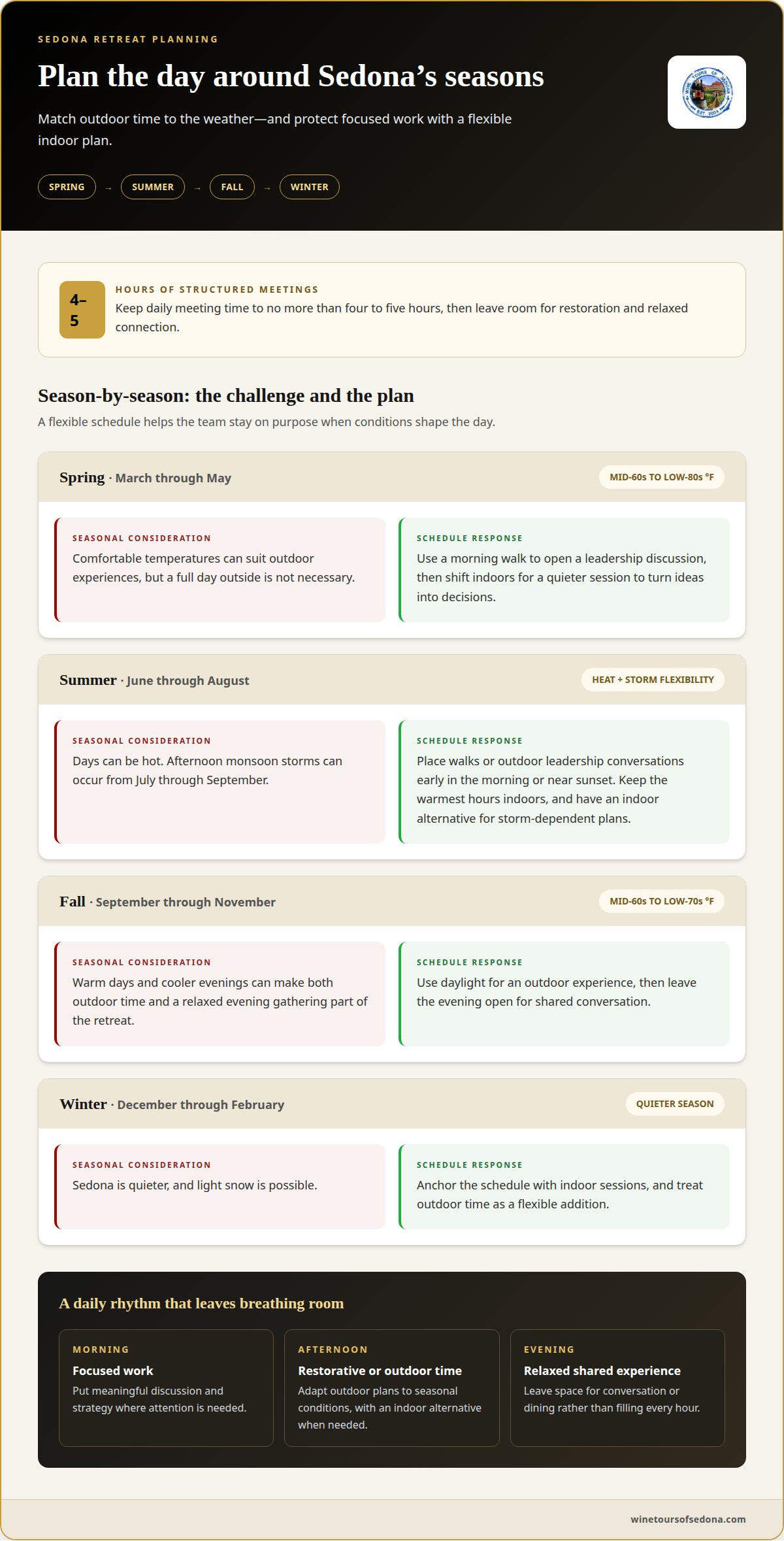
March through May and September through November suit teams seeking comfortable outdoor time in Arizona. Spring brings temperatures from the mid-60s to low 80s Fahrenheit; fall days range from the mid-60s to low 70s. December through February is quieter, with possible light snow, so indoor sessions can anchor the schedule.
Build the calendar around the work that requires everyone’s attention. Keep structured meetings to no more than four to five hours daily, then protect the afternoon for restorative time and the evening for relaxed conversation or dining. A morning strategy session followed by outdoor time near the canyon landscape gives the day a clear rhythm without filling every hour.
Choose meeting spaces to match the season and purpose. An indoor room supports presentations, reliable technology, and focused discussion; an outdoor patio or shaded setting can suit smaller conversations and creative breaks. In a resort, combine a dedicated meeting block with outdoor space and nearby dining, while keeping an indoor alternative in the agenda for winter weather or summer heat.
A typical per-person daily cost depends on lodging, meals, meeting space, transportation, and activities. Build an estimate around those choices rather than relying on one figure; the total will depend on the itinerary.
Begin planning once your preferred season and dates are clear. Coordinate accommodations, meeting-room needs, outdoor plans, and dining before finalizing the agenda, since each choice affects the others. For spring or fall, match the dates to the team’s priorities: outdoor sessions may suit a retreat centered on connection, while an indoor-focused schedule can prioritize concentrated work.
March through May is a popular time to visit Sedona for a corporate retreat, with comfortable temperatures that can suit outdoor activities. September through November brings warm days and cooler evenings. Keep structured meetings to no more than four to five hours per day, with meaningful work in the morning, restorative or outdoor time in the afternoon, and a relaxed shared experience in the evening.
3. Seasonal weather and retreat timing
Summer in Sedona calls for a deliberate outdoor schedule. From June through August, days can be hot, so plan trail walks or outdoor leadership conversations for early morning or near sunset. That leaves the warmest part of the day for indoor sessions, lunch, or quiet work. A flexible itinerary keeps the retreat’s purpose on track if heat changes outdoor plans.
Afternoon monsoon storms can occur from July through September. Keep outdoor activities flexible and plan an indoor alternative for any session that depends on clear skies. For example, hold a morning team conversation outside, then move afternoon work to a meeting room if storms develop. This simple sequence protects time for connection without making weather the focus of the day.
Spring, from March through May, can support a mix of indoor and outdoor experiences. Build the itinerary around the team’s priorities, rather than planning a full day outside. A morning walk can open a leadership discussion, while a quieter indoor session later gives colleagues space to turn ideas into decisions.
Fall, from September through November, brings warm days and cooler evenings. Use daylight for an outdoor experience, then leave the evening open for shared conversation. In winter, December through February, Sedona is quieter and light snow is possible. Keep indoor sessions central, with outdoor time as a flexible addition.
Before choosing activities, consider participants’ fitness levels, temperatures, and seasonal conditions. Then give each day a clear rhythm: focused work in the morning, restorative or outdoor time in the afternoon, and a relaxed shared experience in the evening. A three-day offsite can build connection gradually, moving from introductions to deeper conversations and a final commitment to carry into daily work.
Retreat goals for remote and hybrid teams
A Sedona corporate retreat for remote teams needs a purpose beyond getting colleagues into the same room. Choose one outcome, such as clearer decision-making, stronger working relationships, or shared priorities. Then shape each session around that outcome. A three-day retreat can lay the groundwork for future collaboration, but it cannot resolve every organizational challenge at once.
For a Sedona corporate retreat for remote teams, start by naming a specific point of friction, such as unclear handoffs or meeting overload. Use one discussion to understand the issue, another to explore solutions, and a final session to agree on a practical next step. This gives participants something concrete to carry into their daily work.
Team-building works best when it supports the retreat’s purpose. A shared experience against Sedona’s red-rock landscape can make room for informal conversation after focused work. A relaxed dinner can help colleagues connect beyond video calls. Offer ways to participate that suit different comfort levels, such as walking, observing, or talking in a quieter setting.
Close the offsite with an action each person can remember. Invite participants to identify one decision, commitment, or conversation to take back to work. Capture shared commitments in a brief team note, with an owner and next step for each. That record helps the retreat’s momentum continue after colleagues return to separate routines.
For a vineyard-centered shared experience, explore a Verde Valley tasting as part of your team’s retreat plans.
Wine Tours of Sedona: The Corporate Event Sedona Wine & Food Tour
Wine Tours of Sedona’s The Corporate Event Sedona Wine & Food Tour adds a wine-and-food experience to a team retreat. It gives colleagues a shared setting beyond the meeting room, where conversation and connection can unfold throughout the experience. For teams seeking a vineyard-centered outing, the Alcantara Estate Vineyards Tasting Experience or The Terroir of the Verde Valley Wine Trail may also suit the retreat’s aims.
Choose the experience that best matches your team’s purpose: a relaxed social gathering, a distinctive shared activity, or an outing centered on the Verde Valley’s wine landscape. These options can add a memorable, local element to a retreat itinerary without replacing the focused work that brings colleagues together.
To plan a corporate wine-and-food experience for your retreat, contact Wine Tours of Sedona.
Shape the Next Gathering Around What Matters
A Sedona corporate retreat for remote teams can become a turning point when shared experiences lead back to meaningful work. Before choosing the next activity, decide what the team should carry home: a new conversation, a stronger relationship, or one clear commitment. Let that intention guide the gathering, so the red-rock setting supports connection rather than competing with it.
For a vineyard-centered experience, Wine Tours of Sedona offers A Multi-Vineyard & Winery Tasting Experience, Alcantara Estate Vineyards Tasting Experience, and The Terroir of the Verde Valley Wine Trail. Each can bring a distinctive sense of place to the retreat’s shared moments.
Give your team’s next gathering a thoughtful beginning. Contact Wine Tours of Sedona to explore an experience that suits its goals, and look forward to reconnecting amid Sedona’s remarkable landscapes.
Frequently Asked Questions
What Makes a Retreat Truly Restorative for Teams?
A restorative retreat pairs purposeful conversation with genuine space to pause. Set focused work windows, then plan a shared experience where colleagues can put phones away without imposing a full-day device ban. For example, invite the team to set aside phones during a scenic walk while keeping devices available for essential needs. End with each participant naming one commitment to carry into everyday work.
What is the best time of year for a retreat in Sedona?
March through May and September through November are strong choices for teams hoping to include outdoor time. Spring’s mid-60s to low-80s Fahrenheit conditions can suit daytime activities, while fall brings warm days and cooler evenings. Choose the season around your team’s preferred rhythm: longer outdoor breaks, evening conversations, or a schedule centered more heavily on indoor work.
What team-building activities are available in Sedona for corporate groups?
Teams can build connection through shared outdoor experiences, scenic walks, and food or wine-focused outings. Wine Tours of Sedona offers the Red Rock State Park – Scenic Sedona Hiking Adventure and Vines & Vistas: Kayak and Wine Experience, alongside The Corporate Event Sedona Wine & Food Tour. Match the activity to the group’s comfort, interests, and retreat purpose, and make participation choices welcoming.
What is the best time of year to plan a corporate retreat in Sedona?
Choose March through May or September through November when comfortable outdoor conditions matter to the retreat. For summer dates, June through August, plan outdoor experiences early or near sunset and include an indoor alternative. December through February offers a quieter setting, though light snow is possible. Let the team’s priorities and seasonal conditions shape the final dates.
Recent Comments