
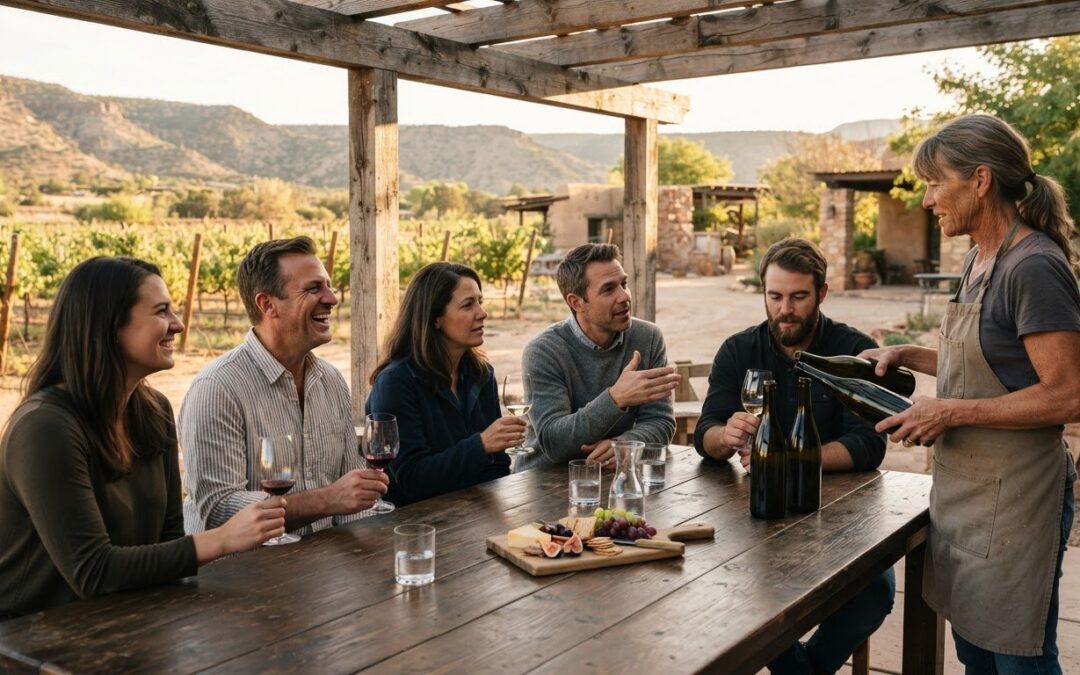
The most memorable Sedona retreats balance focused work with experiences that invite people into the landscape. A Sedona corporate retreat that isn’t boring can pair 90-minute work sessions with a shared red-rock hike, optional wellness time, and a tasting experience that gives the team room to connect beyond the meeting table. The right mix depends on your group’s interests and comfort.
A change of scenery can make time together feel different; the challenge is shaping it into a retreat with purpose, not just a packed schedule. This guide shares practical team-building ideas, ways to choose a setting that supports conversation and focus, and a sample Friday-through-Sunday itinerary. Whether colleagues are traveling from Phoenix, Tempe, Scottsdale, Los Angeles, Las Vegas, or Dallas, build in time for meaningful work, vivid desert scenery, good food, and unhurried moments that help a corporate gathering feel more connected.
Key Takeaways
- Match team-building activities to your group’s interests and comfort, balancing shared experiences with time for focused work.
- Choose a setting that supports productive conversations, with dedicated meeting space and convenient access to outings and dining.
- Place the retreat’s most important conversation on the first full morning, then leave an unscheduled window for reflection or informal connection.
- Use thoughtful recognition to make team contributions part of the retreat, and consider a wine-and-food tasting experience as a distinctive shared outing.
1. What team-building activities are available in Sedona?
Sedona gives retreat groups options ranging from red-rock adventures to tasting experiences and quiet time outdoors. Bell Rock, Doe Mountain, and Soldier Pass are examples of morning hikes that can bring colleagues together beyond the meeting room. A shared trail creates room for informal conversation, while the landscape gives the gathering a memorable sense of place. Choose a route that suits your group’s comfort and energy.
Which Sedona retreat venues offer adventure activities, wellness, or creative workshops? Start with a venue that has dedicated meeting areas, then plan nearby hikes or wellness and creative sessions around your group’s interests and priorities. A suitable setting supports focused work, while thoughtful activities make the schedule feel more personal.
Keep the workday purposeful rather than crowded. Break retreat work into 90-minute sessions, then make room for a hike, an offsite outing, or a shared dinner. For an executive group, place substantial discussion in a dedicated meeting block and let the activity afterward create space to reconnect. A tasting experience can offer a relaxed change of pace, while a scenic excursion makes the landscape part of the gathering.
Resist filling every open hour. A packed schedule leaves little room for spontaneous conversation, and participants may need different kinds of downtime. Make wellness activities optional so everyone can choose what feels comfortable. A quiet outdoor pause, gentle movement, or time to reflect can offer a midday reset without turning wellness into another obligation.
Build flexibility into the plan with a simple sequence: focused work, a shared activity, then open time. For example, schedule a morning hike at Bell Rock, return for a meeting, and leave the later afternoon unstructured. This balance helps a Sedona retreat feel purposeful and restorative, rather than like a string of appointments.
Choose a retreat venue with dedicated meeting areas, then arrange nearby hikes at Bell Rock, Doe Mountain, or Soldier Pass, along with wellness or creative sessions tailored to the group’s interests.
2. Sedona’s setting and its effect on corporate retreats
Sedona’s red-rock setting adds an outdoor dimension to work usually held in a boardroom. The landscape around Oak Creek offers a striking contrast to indoor discussions and a memorable backdrop for shared time. Choose a setting that meets the retreat’s practical needs as well as its purpose: scenic views matter, but dedicated meeting space helps keep important conversations focused.
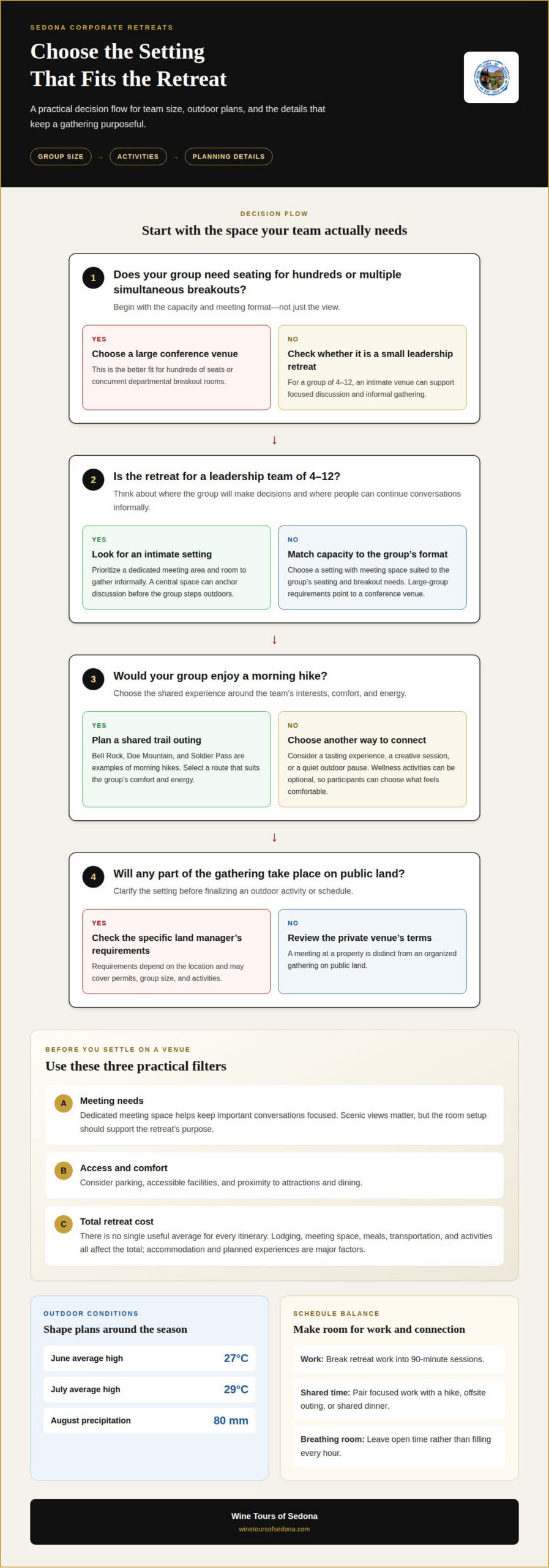
For a leadership retreat of 4–12 people, look for an intimate venue with a dedicated meeting area and room to gather informally. A small group can use one central space for discussion, then step outdoors for conversation or reflection. Groups needing seating for hundreds or multiple simultaneous departmental breakouts are better suited to a large conference venue than a private estate.
What are the best Sedona corporate retreat venues for small versus large teams? Smaller leadership teams can prioritize a private setting with dedicated meeting space. Large groups that need hundreds of seats or concurrent breakout rooms need a conference venue. Consider parking, accessible facilities, and proximity to attractions and dining when choosing.
Events on public land are subject to the requirements of the specific land manager and location, including rules for permits, group size, and activities. Private venues have their own terms. Distinguish a meeting at a property from an organized gathering on public land before setting the schedule.
What is the average cost per person for a corporate retreat in Sedona? There is no single useful average for every itinerary: lodging, meeting space, meals, transportation, and activities all affect the total. Accommodation and planned experiences are major factors, and the price is provided after a quote request.
Set one clear retreat goal before choosing a venue. For example, a strategy session needs reliable meeting space, while a connection-focused gathering may give more weight to outdoor access and shared dining. Sedona’s seasonal conditions also affect the balance: average high temperatures reach 27°C in June and 29°C in July, while August averages 80 mm of precipitation. Use those conditions to shape outdoor plans and choose a setting that keeps the retreat comfortable and purposeful.
3. A sample three-day retreat itinerary
A Friday-through-Sunday plan can give a Sedona retreat a clear arc: arrive, focus, then reconnect. Use the meeting room for decisions and reserve outdoor experiences for conversations that benefit from a change of pace. Leave breathing room in the schedule instead of turning every gathering into another session.
Friday: Begin with arrivals, an informal welcome, and a short orientation to the retreat’s goals. Use the afternoon for focused discussion so everyone understands the priorities ahead. Keep the first evening simple, with dinner and relaxed conversation instead of another formal presentation. This gives guests time to settle in before the most demanding work begins.
Saturday: Schedule the highest-stakes conversation for the first full morning. That timing gives the executive team space to address its central decision before the day’s activities. Follow with lunch and a shared experience, then preserve a 60- to 90-minute unscheduled window. Participants can use that time for personal reflection or informal conversation, both of which may surface thoughts that structured sessions miss. In the evening, bring the group together over dinner and invite each person to share one useful insight from the day.
Sunday: Start with a concise review of decisions, owners, and next steps. A final meeting in the same room can turn retreat discussions into clear commitments. Leave time afterward for a quiet walk or an unhurried breakfast before departure. The close should feel intimate, not like a rushed extension of Saturday’s agenda.
For a two- or three-day retreat, schedule essential work early and make activities part of the plan, not just rewards after work. Choose experiences that suit the group’s energy, and keep wellness options voluntary. A tasting, a scenic outing, or time outdoors can each create a different kind of connection. A strong itinerary combines structure, shared memories, and enough quiet to reflect.
4. Team building and employee recognition
Recognition works best when it feels personal, specific, and tied to real contributions. Before the retreat, ask leaders to identify achievements worth celebrating, such as mentoring a colleague, solving a difficult problem, or supporting a major team goal. At dinner, share each recognition with a concrete example. A thoughtful account of someone’s contribution carries more meaning than a generic thank-you.
Make team-building activities welcoming for different comfort levels. A hike can spark easy conversation, while a relaxed tasting offers a gentler shared setting. For an outdoor option, the Red Rock State Park – Scenic Sedona Hiking Adventure brings the red-rock landscape into the group’s time together. Keep participation voluntary and choose activities suited to the team’s interests, mobility, and energy.
Choose accommodations and dining to support connection, not just convenience. A shared meal gives colleagues a natural place to talk across roles, while an intimate gathering around a fireplace may encourage quieter voices to join in. If guests have different schedules or preferences, build in unstructured time rather than expecting everyone to take part in every activity. This helps recognition feel welcoming, not staged.
Close the retreat with a simple recognition ritual. Invite each person to name one contribution they valued from a colleague, then connect those examples to the team’s next shared goal. Leadership can capture the commitments and follow up after everyone returns, so appreciation continues beyond Sedona. A scenic outing or Alcantara Estate Vineyards Tasting Experience can give the group a distinctive backdrop for celebration. To weave landscape and shared achievement together, explore a scenic Sedona hiking experience as part of your retreat plans.
Wine Tours of Sedona: A Multi-Vineyard & Winery Tasting Experience
Wine Tours of Sedona offers the A Multi-Vineyard & Winery Tasting Experience as a shared outing for teams ready to step beyond the meeting room. A private, customizable experience can give colleagues time to connect over regional tastings and the distinctive Verde Valley landscape. Choose it when your retreat calls for a relaxed gathering centered on conversation and discovery.
For a different focus, the Alcantara Estate Vineyards Tasting Experience centers the outing at the estate, while The Terroir of the Verde Valley Wine Trail explores the region’s wine character. Groups looking to combine tastings with a meal can consider the Sedona & Verde Valley Tour: Wine, Beer, Raw Chocolate, & Lunch. Each option adds a distinct shared experience to retreat plans.
To discuss a tasting experience for your Sedona gathering, contact Wine Tours of Sedona.
Shape the Retreat Your Team Will Remember
A memorable retreat isn’t defined by how much fits into the schedule. It’s shaped by the conversations people carry home, the appreciation they feel, and the shared moments that help colleagues connect. Choose an experience that reflects your team’s character, then let the rest of the gathering unfold with intention. That’s how a Sedona corporate retreat that isn’t boring can feel purposeful and genuinely restorative.
For a tasting-centered outing, Wine Tours of Sedona offers the A Multi-Vineyard & Winery Tasting Experience, Alcantara Estate Vineyards Tasting Experience, and The Terroir of the Verde Valley Wine Trail. Each gives your group a distinctive way to discover the region together, bringing the pleasure of tasting into the wider landscape of the retreat.
Let your team’s goals guide the final choice, whether you’re planning a relaxed shared outing or a more focused wine experience. Contact Wine Tours of Sedona to explore an experience for your gathering, and begin shaping a retreat your team will be glad to remember.
Frequently Asked Questions
What team-building activities are available in Sedona?
Sedona teams can choose from hiking, tasting outings, kayaking, and cultural excursions. For a quieter alternative to a strenuous trail, consider a shared food experience or a visit focused on local history. Match the activity to the group’s energy and interests, and make participation comfortable for different preferences. One useful planning step is to offer a choice between an active outing and a more relaxed option.
Why choose Sedona for a corporate retreat?
Sedona pairs a distinctive red-rock landscape with opportunities to bring work and shared experiences into the same trip. The contrast offers a fresh setting for conversation, while the outdoor scenery creates a memorable backdrop for time together. It suits groups seeking focused discussion and a sense of place, rather than a schedule confined entirely to indoor meetings.
What are the most engaging corporate retreat activities in Sedona for teams?
The most engaging activities connect naturally to your team’s purpose. A Sedona corporate retreat that isn’t boring might pair a collaborative challenge with a scenic outing, then invite colleagues to share what they noticed or learned. For a group that values discovery, local history or regional tastings can prompt conversation. Give each activity a clear purpose instead of adding experiences simply to fill the itinerary.
What is the best time of year for a corporate retreat in Sedona?
The best timing depends on how much of your agenda takes place outdoors. Sedona’s average high is 6°C in January, 27°C in June, and 29°C in July; August averages 80 mm of precipitation. Use those seasonal conditions to shape activity timing and indoor alternatives. If hiking is central to the retreat, build flexibility into the schedule so outdoor plans can adapt to the day’s conditions.
How can a Sedona retreat balance meetings with fun without overpacking the schedule?
Give every meeting a defined outcome, then choose one shared activity that supports the retreat’s purpose. For example, use a strategy discussion to identify a team challenge, then make the next outing a chance to connect informally rather than another structured exercise. Keep transitions and meals realistic, and leave open space for conversation. This creates a considered rhythm without scheduling every hour.
What accessibility, transportation, and weather risks should planners consider for a Sedona retreat?
Plan around the movement your itinerary actually requires: consider parking, accessible facilities, and the distance between accommodations, activities, and dining. For outdoor plans, use seasonal temperatures and precipitation to decide when to schedule excursions and what indoor alternative to include. Choose activities suited to participants’ mobility, and keep travel between locations simple so transfers don’t dominate the day.
Recent Comments