
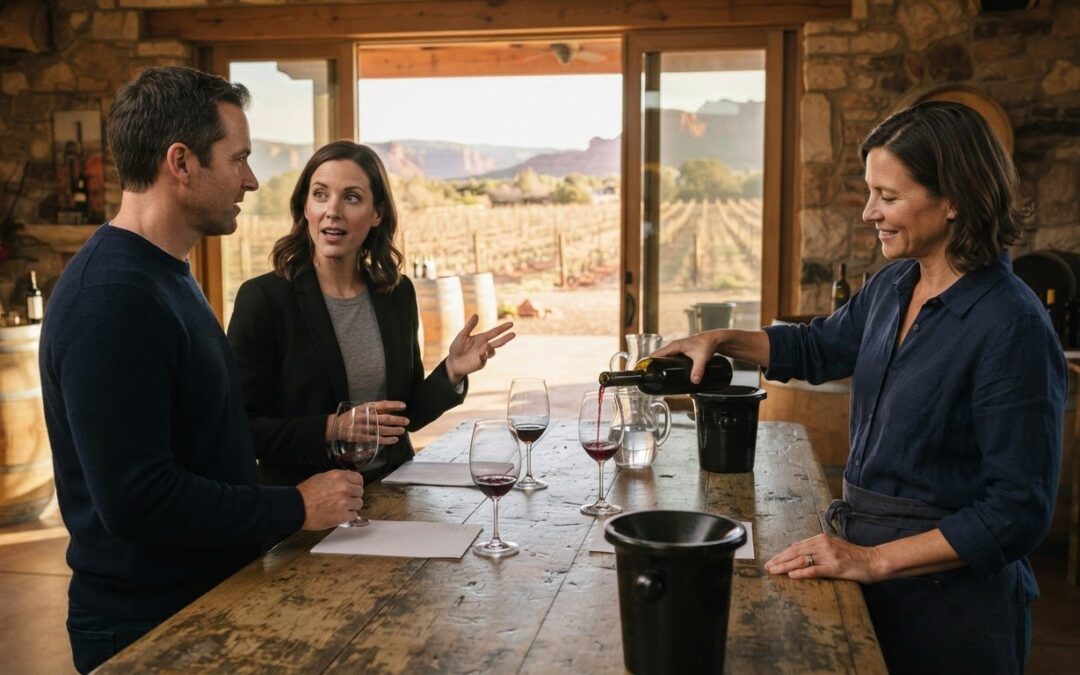
A sedona leadership retreat can pair focused executive discussions with time in a striking natural landscape. With trusted local experts like Wine Tours of Sedona helping teams navigate the area, the season helps determine how to balance outdoor activities with indoor work. In summer, schedule hikes earlier and leave afternoons for restorative indoor time. In winter, build flexibility into the plan for changing weather.
When leadership teams step away from their usual pace, a new setting can give conversations a different rhythm and room for fresh perspective. Open views, distinctive geological formations, and quiet moments outdoors create a memorable backdrop for gathering, reflecting, and aligning on what comes next.
This guide explores how a retreat setting can support executive teams and what to consider when choosing a season. Find practical ways to shape the schedule around the landscape, balance focused work with restorative experiences, and make the team’s priorities clear from the start.
Key Takeaways
- Choose two or three retreat priorities, then assign clear ownership so the team leaves with decisions to act on.
- Give executives time to arrive and settle before sessions begin, and reserve the clearest hours of the day for the most demanding discussions.
- Shape the retreat schedule around the season, balancing focused work with restorative time in Sedona’s distinctive landscape.
- Consider a shared local tasting experience as a relaxed way to bring colleagues together beyond the meeting room.
Benefits of holding an executive retreat in Sedona
For executives planning a Sedona leadership retreat, the setting creates a deliberate break from familiar offices and routines. Red-rock formations, open desert views, and quieter surroundings offer a different backdrop for examining decisions. The landscape alone won’t determine the retreat’s value. Begin with a clear purpose, such as aligning on strategy or strengthening relationships across departments, then use the setting to support focused discussion and shared reflection.
A change of scenery can give leaders room to consider familiar challenges from another perspective. Rather than scheduling presentations back-to-back, alternate working sessions with time outdoors or informal conversation. A team might examine a difficult business question in the morning, then walk together before returning to the discussion. That shift can help participants notice different viewpoints and connect beyond their usual roles. Make outdoor experiences relevant to the retreat’s goals, not just another item to check off.
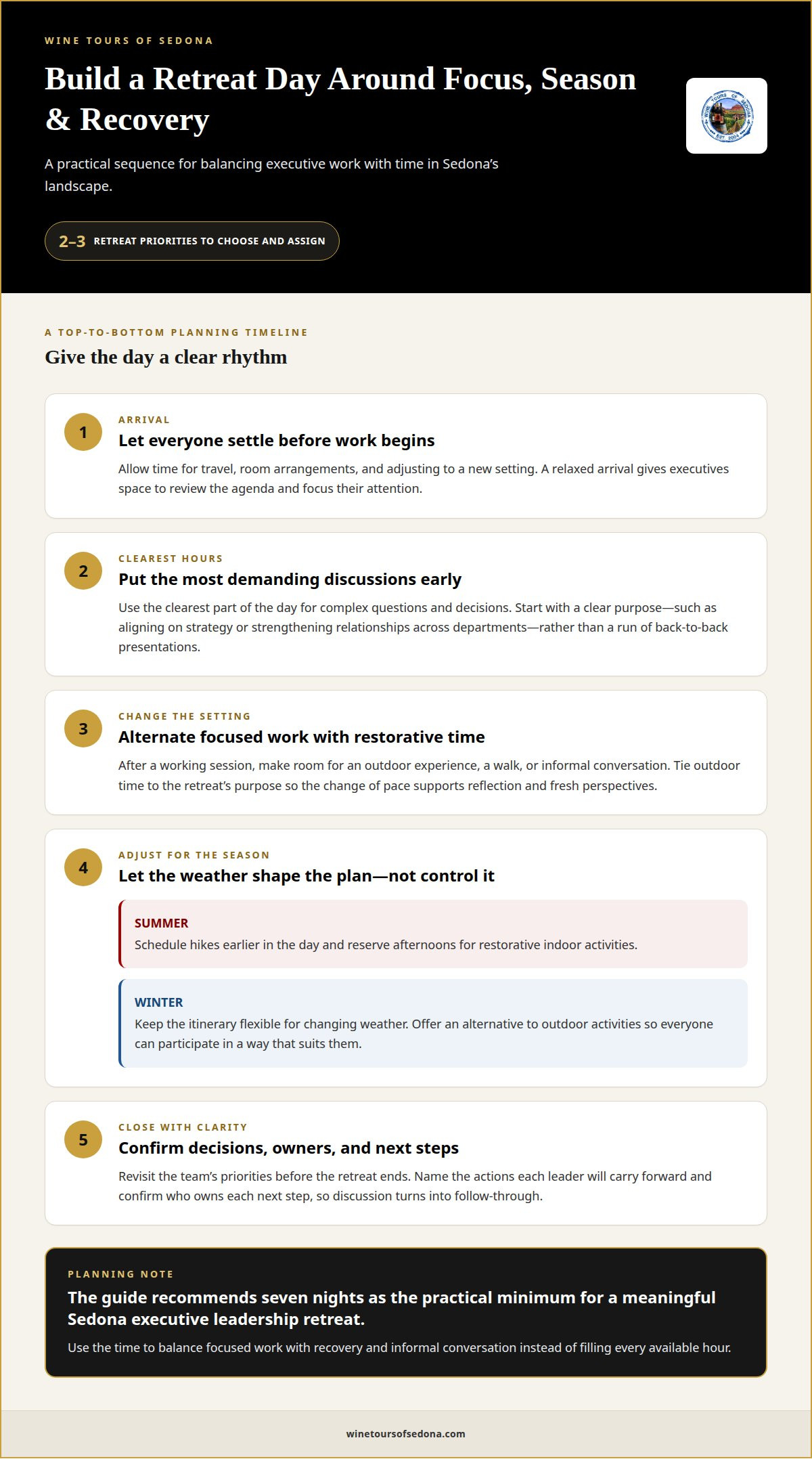
Seasonal planning shapes how the team uses its time. In summer, schedule hikes earlier in the day and reserve afternoons for restorative indoor activities. In winter, keep the itinerary flexible so changing weather doesn’t dictate the entire program. In either season, offer an alternative to outdoor activities so everyone can participate in a way that suits them.
Give executives time to arrive and settle before the first work session. Travel, room arrangements, and adjusting to a new environment can make an immediate start feel rushed. A relaxed arrival period lets participants review the agenda and focus their attention. Schedule demanding discussions early in the day, then use later sessions for reflection, synthesis, or smaller conversations that clarify next steps.
An executive women’s leadership retreat can be designed around the questions participants choose to bring. The group might explore decision-making influence, sponsorship, or leadership transitions without assuming everyone shares the same experience. Small-group conversations allow room for candid perspectives, while a full-group session can identify common themes. For sensitive topics, set clear discussion goals and expectations for respectful participation before the conversation begins.
Mindfulness can provide a simple transition from a busy agenda to focused work. Open a session with a quiet pause, inviting participants to settle their attention and consider the question before them. Follow with a practical prompt tied to the business discussion. This practice doesn’t replace analysis or decision-making; it gives leaders a moment to notice assumptions and approach the conversation with greater intention.
Executive networking works best when conversation has a purpose. Pair colleagues from different functions and invite each to share a current challenge, then ask them to identify one useful perspective from the exchange. A walk or shared meal can make conversation feel less formal. A thoughtful prompt keeps it relevant to leadership while giving executives space to build relationships beyond reporting lines and scheduled meetings.
Choose accommodations and gathering spaces to support the retreat’s intended rhythm, whether that means quiet reflection, collaborative sessions, or informal connection. Consider how participants will move between focused work and restorative activities. A well-planned Sedona leadership retreat brings practical decisions and personal reflection into one experience. Close by naming the actions each leader will carry forward, so the team can apply its discussions to everyday responsibilities.
Mindfulness can provide a simple transition between demanding discussions and reflection, giving participants a pause before moving to the next topic. Keep the practice brief and invitational, and leave room for those who prefer a quiet moment or a short walk. As the retreat draws to a close, revisit the team’s priorities and confirm who will own each next step. Identifying two or three priorities and agreeing on ownership can help the group stay focused and clarify follow-through.
A practical schedule leaves leaders room to settle into the setting, work through complex questions, and reflect together. The guide recommends seven nights as the practical minimum for a meaningful executive leadership retreat in Sedona. Use that time to balance focused work with recovery and informal conversation, rather than filling every available hour. A deliberate close can leave participants with clear commitments and a shared understanding of what happens next.
Your leadership
Start planning by deciding what leadership needs to accomplish together. Choose two or three priorities, then assign an owner to each. For example, a team might focus on strategic direction, decision rights, and cross-functional execution. Naming priorities keeps the retreat from becoming a series of interesting discussions without a shared destination. Each owner can bring relevant context, frame the decision, and identify who should contribute before the group meets.
Turn each priority into a question the team can answer. “How should we grow?” invites broad discussion; “Which customer segments will receive our attention next?” narrows the focus. For every question, define the decision needed, the information required, and who has authority to make it. This helps executives distinguish a decision from an update or open-ended brainstorm, and makes the retreat agenda easier to shape.
Preparation should give participants a common starting point, not a stack of reading. Share a concise briefing with key decision questions, current assumptions, and unresolved tensions. Ask each executive to identify one risk or opportunity the group may be overlooking. For instance, a finance leader might flag resource constraints while a customer-facing leader describes changing client needs. These contrasting perspectives make the conversation more specific from the outset.
A five-day retreat arc can provide room for preparation, candid discussion, and integration. The first day can center on arrival and orientation, while the next morning opens with the most consequential leadership question. A sample retreat program scheduled March 2-4, 2027, runs from 9:00 am to 4:00 pm. That window offers a practical example of defined working hours, rather than an invitation to fill every available moment with meetings.
Design sessions around the kind of thinking each priority requires. Use a decision meeting when the team has evidence and needs to choose. Use a listening session when leaders need to surface different interpretations before committing. One useful sequence is to hear perspectives without interruption, identify areas of agreement and tension, then record the decision and its owner. This balances participation and helps the team distinguish genuine alignment from quick consensus.
Build accountability into the final conversations. For each decision, record the action, responsible owner, collaborators, and next review point. If executives agree to change a process, specify which team will take the first step and how affected groups will be informed. These details connect retreat discussions to daily leadership practice. Without them, even a persuasive conversation can lose momentum when participants return to separate calendars and responsibilities.
Integration matters as much as the meeting itself. Close each day with a short review: what shifted, what remains unresolved, and what needs attention tomorrow? On the final day, revisit the original two or three priorities and compare them with the decisions recorded. This simple step helps expose unfinished work while everyone is still together. It also gives leaders a shared account of what they agreed to do.
Leave space for individual reflection alongside group work. Ask each executive to write one commitment and one question to carry forward. Then invite participants to share what they choose, without requiring identical responses. In a five-day retreat, this closing practice can connect the team’s broader purpose with each person’s responsibilities. It creates a clearer bridge from shared direction to individual action, supported by decisions the group can revisit after returning home.
Wine Tours of Sedona
Wine Tours of Sedona can add a shared tasting experience to an executive gathering when the team wants time together beyond formal sessions. An excursion offers a change of pace, giving colleagues space for easy conversation amid vineyard scenery. Choose an experience that suits the group’s interests, from A Multi-Vineyard & Winery Tasting Experience to The Terroir of the Verde Valley Wine Trail. For a broader outing, Sedona & Verde Valley Tour: Wine, Beer, Raw Chocolate, & Lunch brings several tasting experiences together.
These excursions complement a leadership retreat; they aren’t a substitute for its strategic agenda. Consider one when you want a relaxed opportunity for colleagues to connect beyond the meeting room. To discuss an experience for your gathering, contact Wine Tours of Sedona.
Shape the Next Step for Your Team
As you shape a Sedona leadership retreat, consider how a shared experience outside the meeting room can give colleagues a fresh setting for conversation. Let the team’s purpose guide the choice, whether you’re looking for vineyard tastings, a regional wine trail, or a wider Verde Valley outing. Wine Tours of Sedona offers A Multi-Vineyard & Winery Tasting Experience, Alcantara Estate Vineyards Tasting Experience, and The Terroir of the Verde Valley Wine Trail. Each offers a distinct way to experience the area’s wine country alongside your retreat plans.
When you’re ready to consider an outing for your executive gathering, contact Wine Tours of Sedona to discuss the experience that best suits your team’s plans. A thoughtful choice can add a memorable note to time spent together in Arizona’s striking landscape. May your team leave with meaningful conversations to carry forward and renewed purpose for the work ahead.
Recent Comments